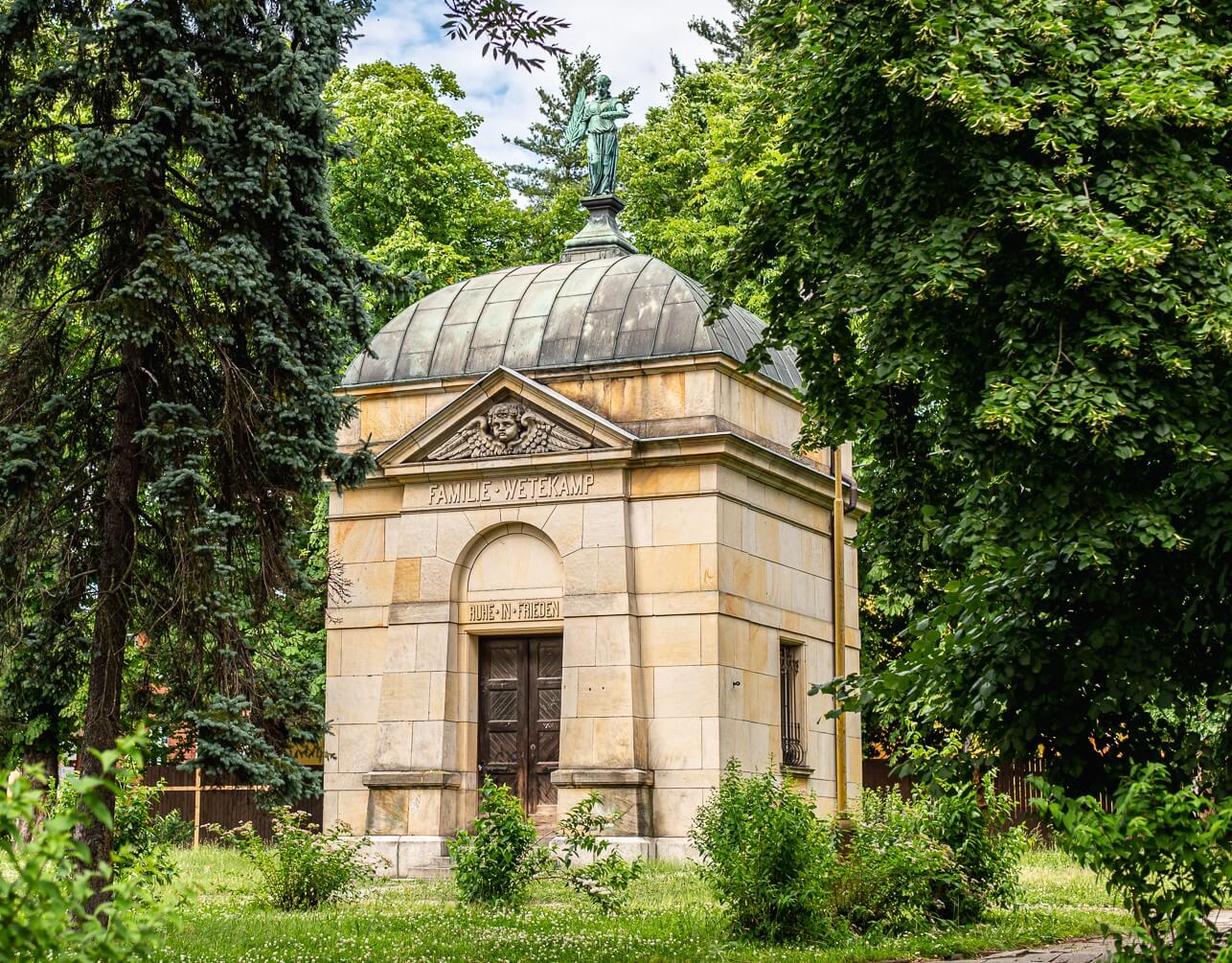
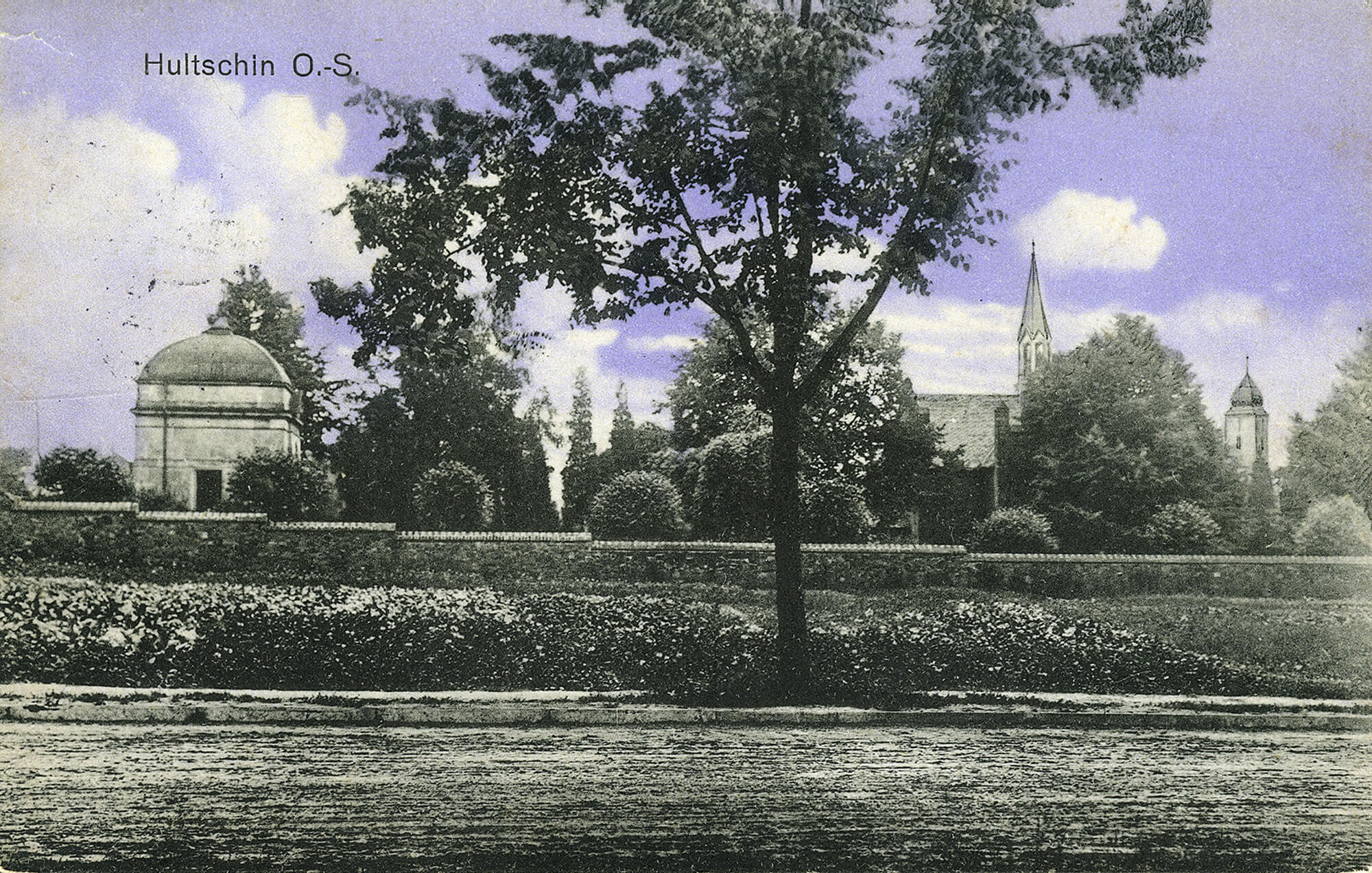
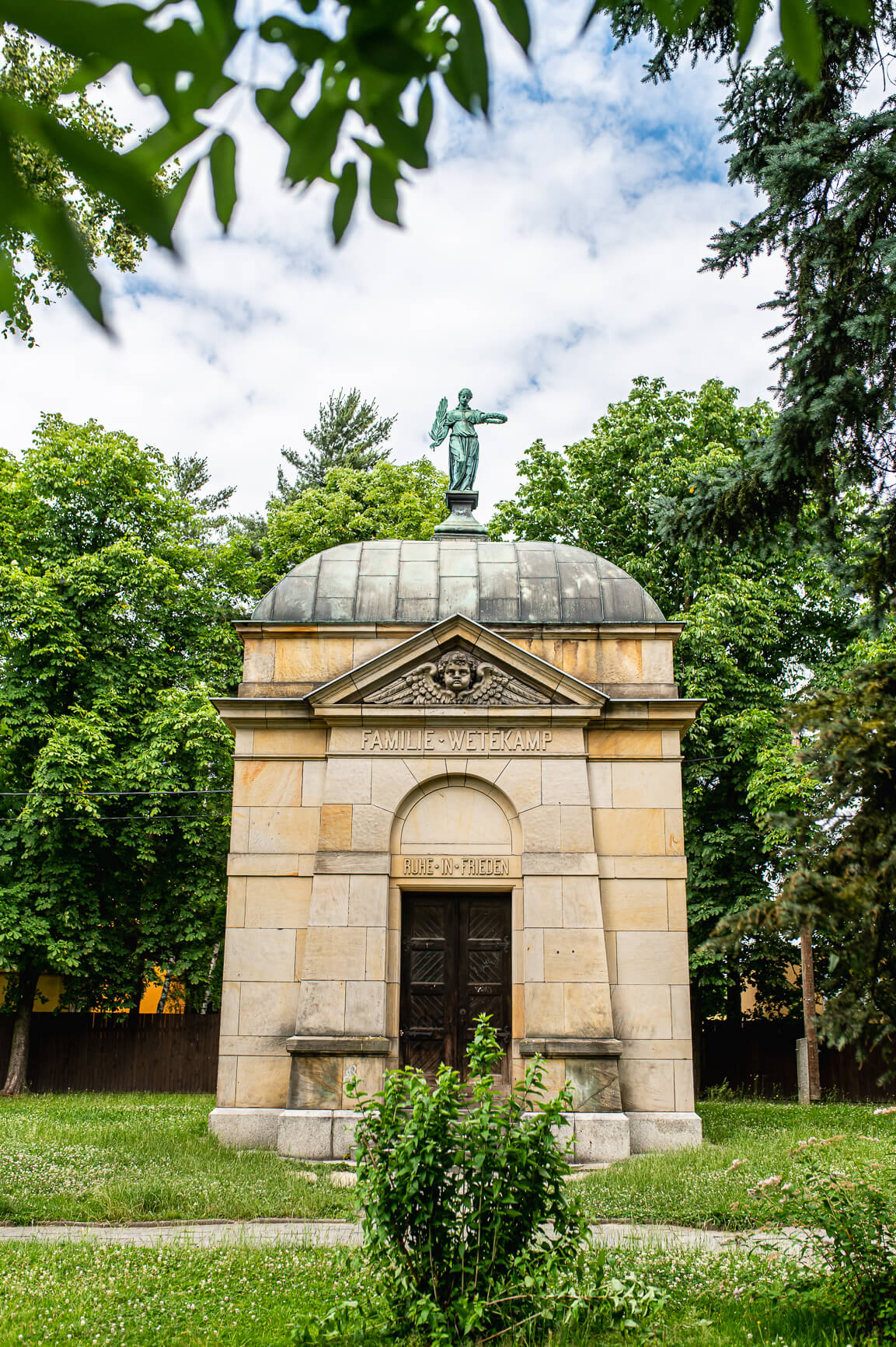
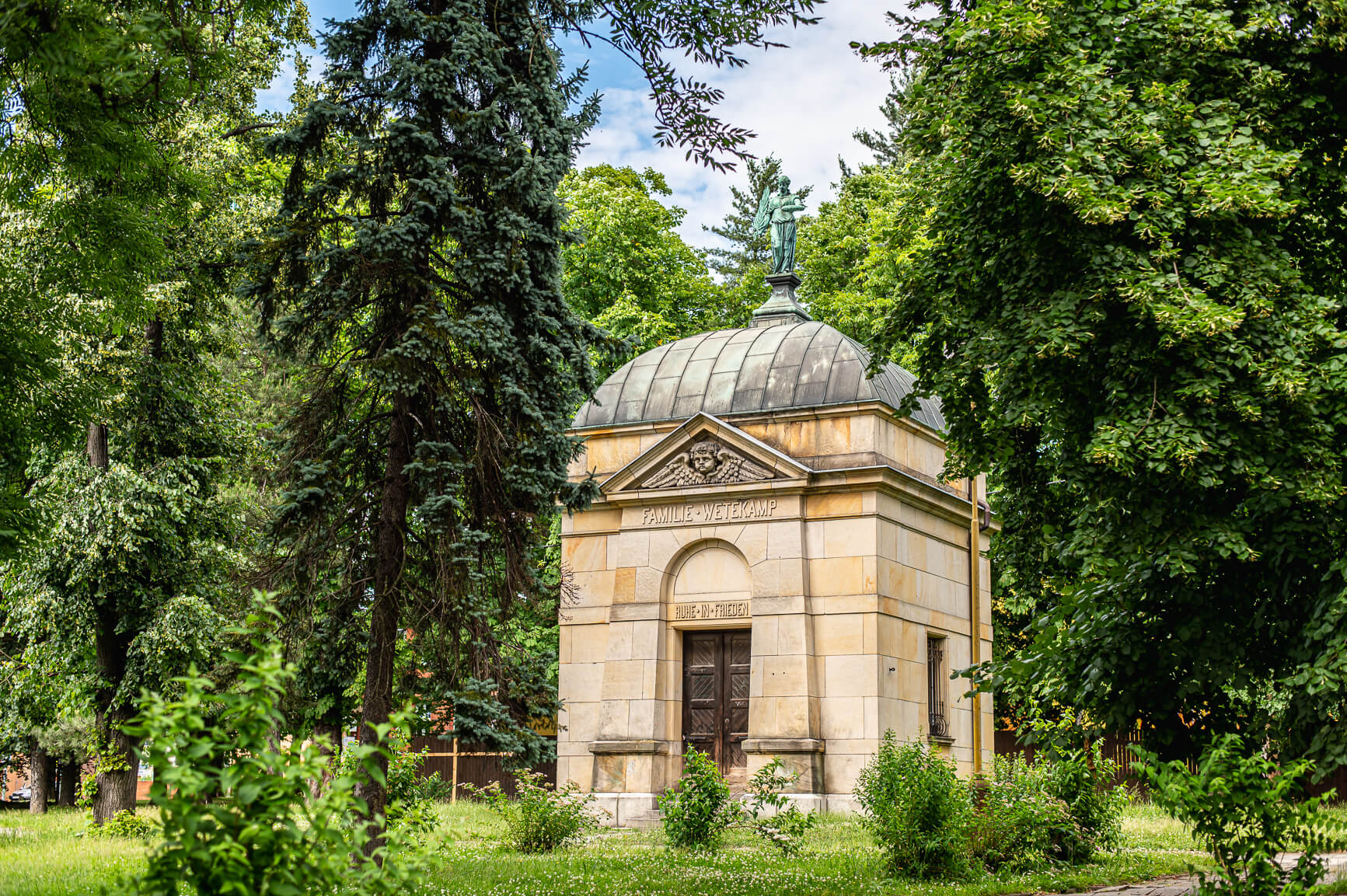
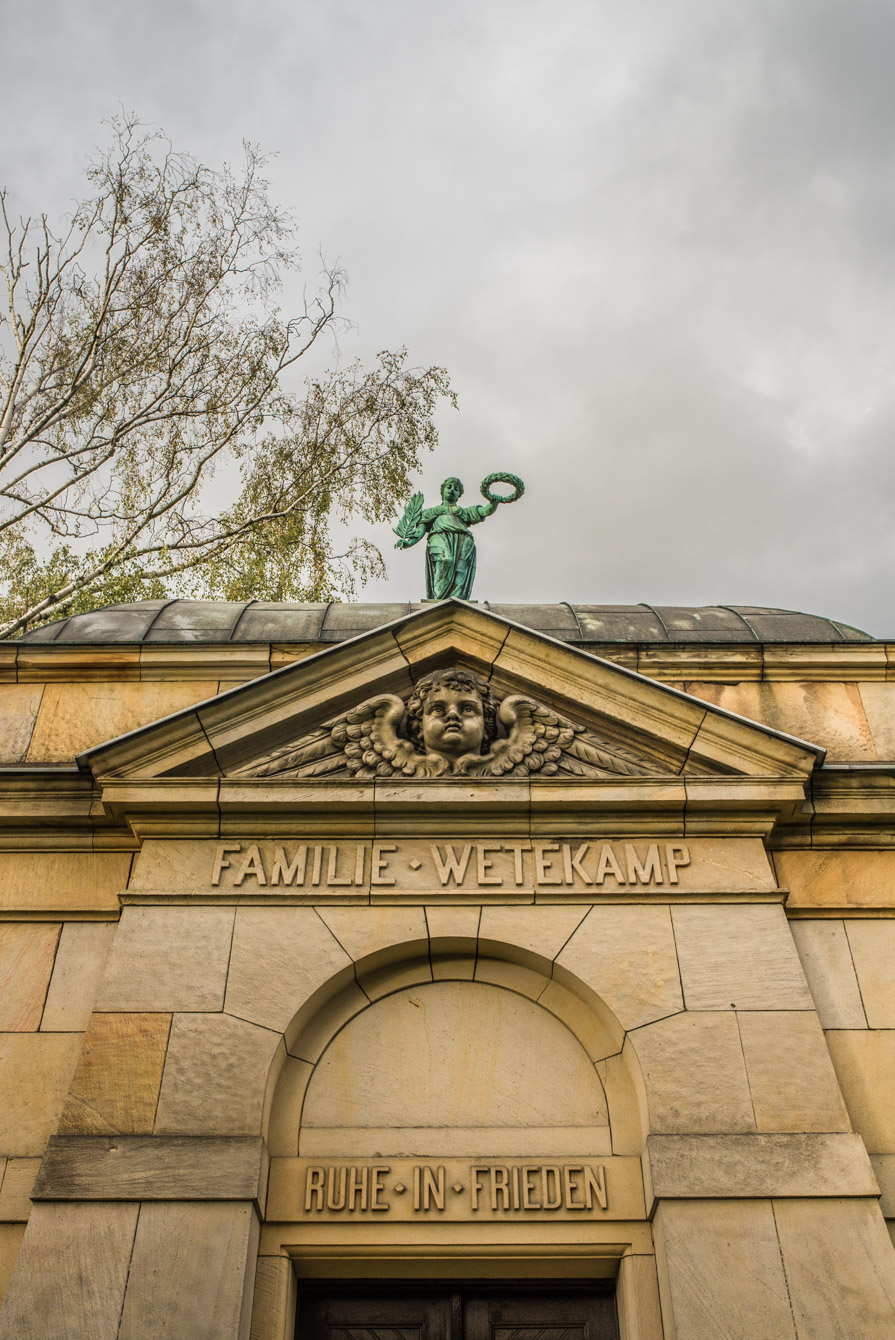
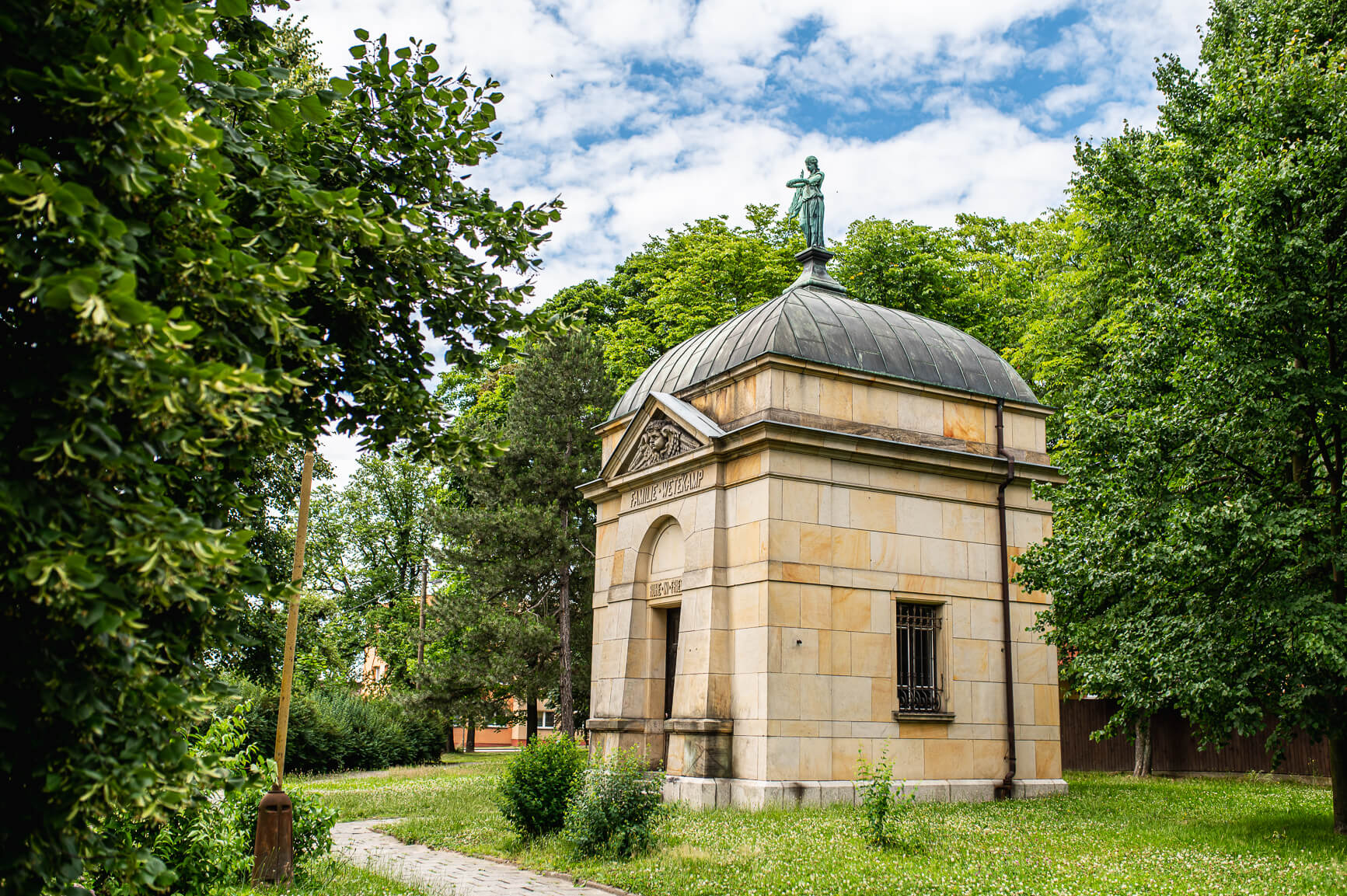
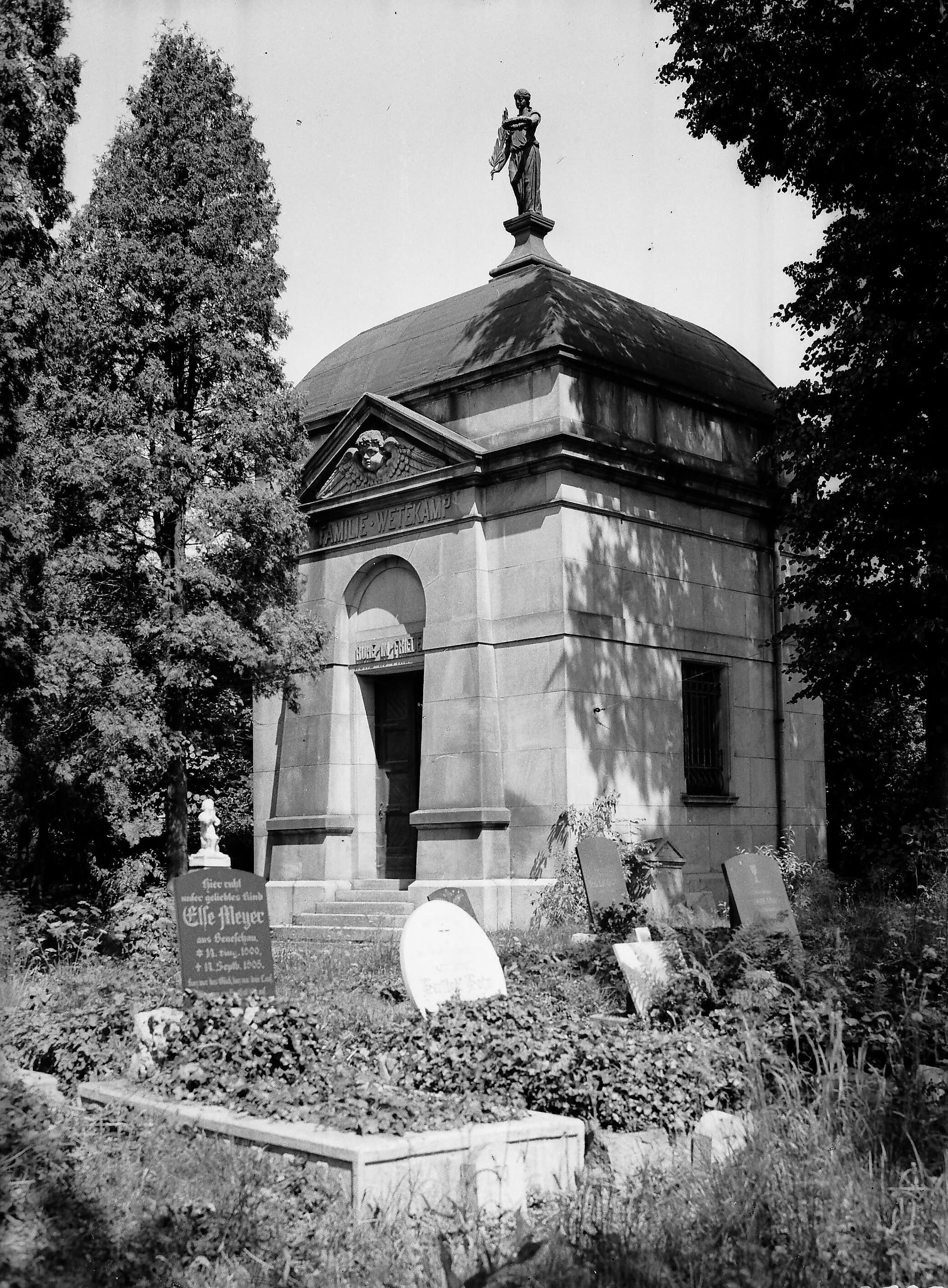
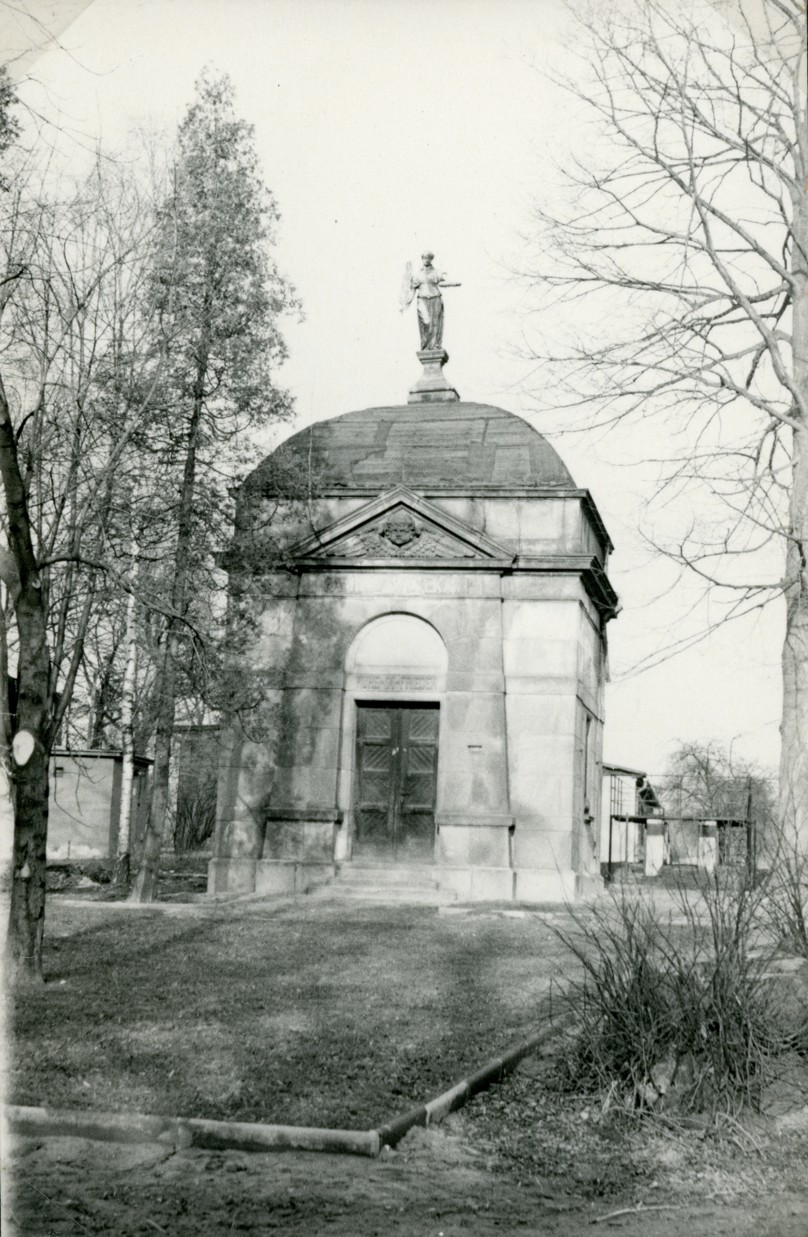
This monumental Neo-Classical family tomb is today the sole surviving remnant of the former Evangelical cemetery, which existed here for a hundred years until its clearance in the 1960s. The mausoleum is built of smoothly dressed sandstone blocks and is calm and solemn in character. The dominant feature of the front is a portal aedicule in the form of a tapered pylon with a continuous entablature and a low triangular pediment. The entablature bears the inscription Familie Wetekamp, while the tympanum is filled with a winged seraph’s head. A domed barrel roof crowns the square structure, surmounted by a figure of a mourning genius holding a palm branch and a laurel wreath.
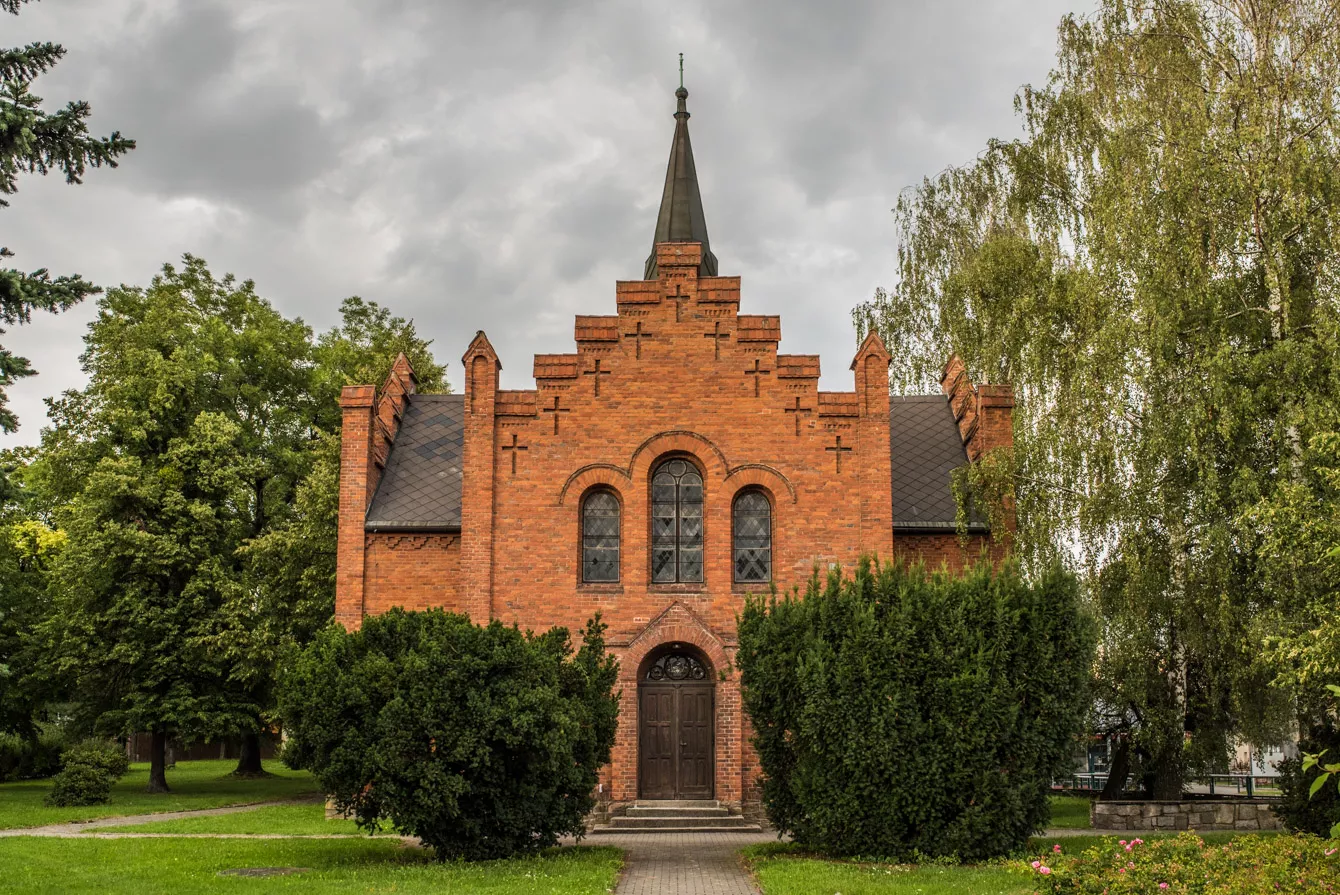
The mausoleum was erected by Wilhelm Moritz Wetekamp (1829–1898), general director of Baron Rothschild’s estate in Šilheřovice, after the death of his wife. Wetekamp was from Westphalia and came to the Hlučín area to apply for the post of estate manager, which he obtained in the 1850s. He married a local girl, Anna Werner (1835–1895), daughter of the district surgeon Ernst Wilhelm Werner (1797–1877) of Dlouhá Ves. Werner and Wetekamp were the main initiators of the construction of the Hlučín Evangelical Church and were later leaders of the local Evangelical community. In January 1887, the German Emperor Wilhelm I decorated Wilhelm Moritz Wetekamp for his services with the Order of the Red Eagle, 4th Class.
Besides the spouses Anna and Wilhelm, the tomb contains their two sons: the elder, Oscar (1858–1916), studied medicine and became a doctor; the younger, Wilhelm Hugo (1862–1882), studied agriculture but died at just twenty.