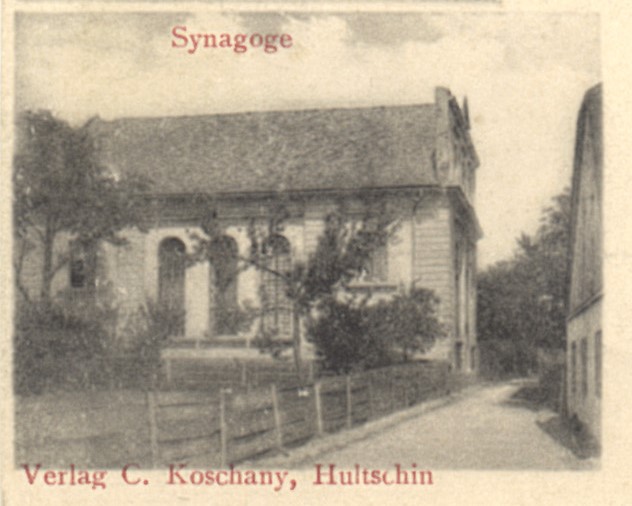
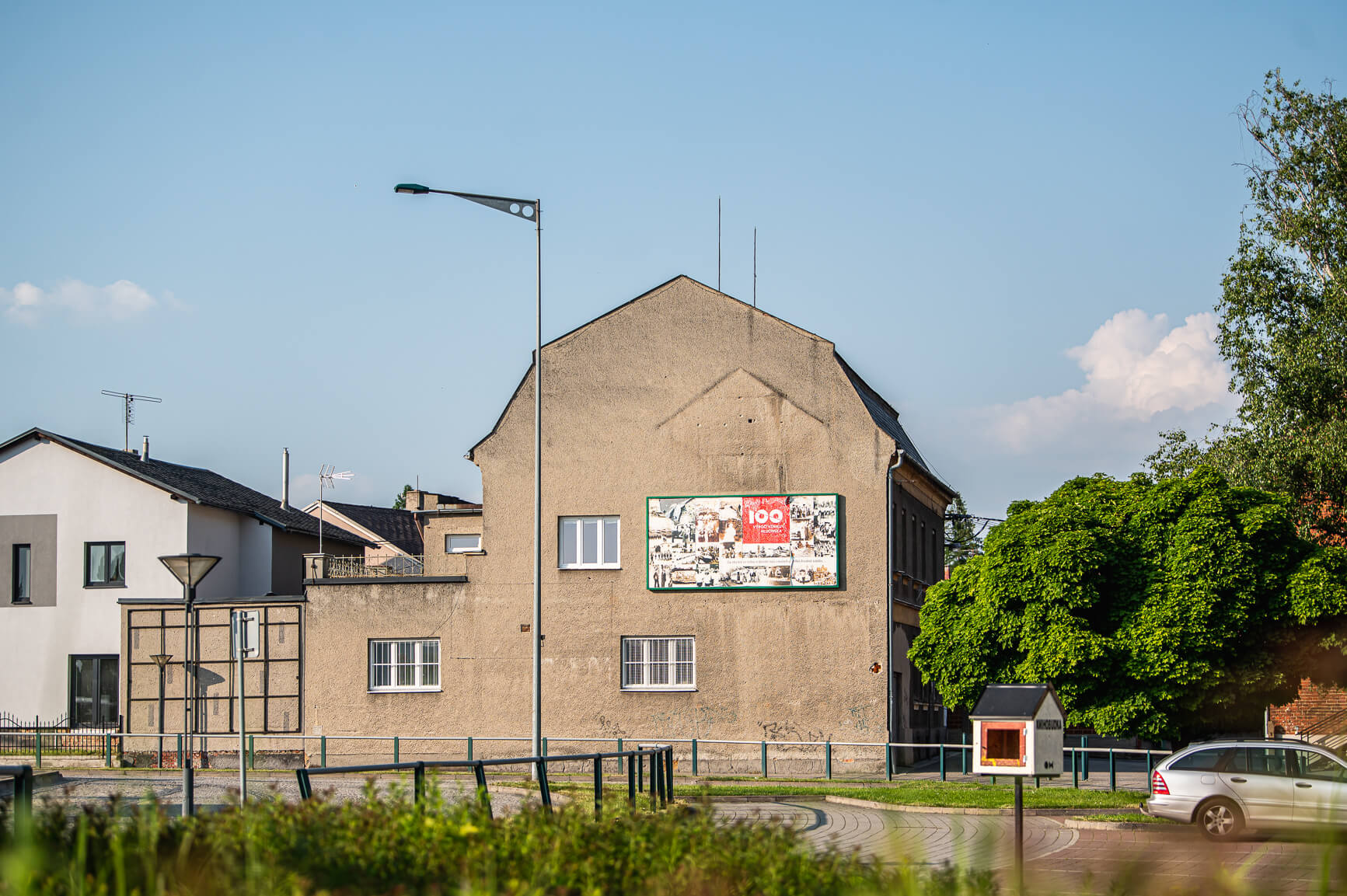
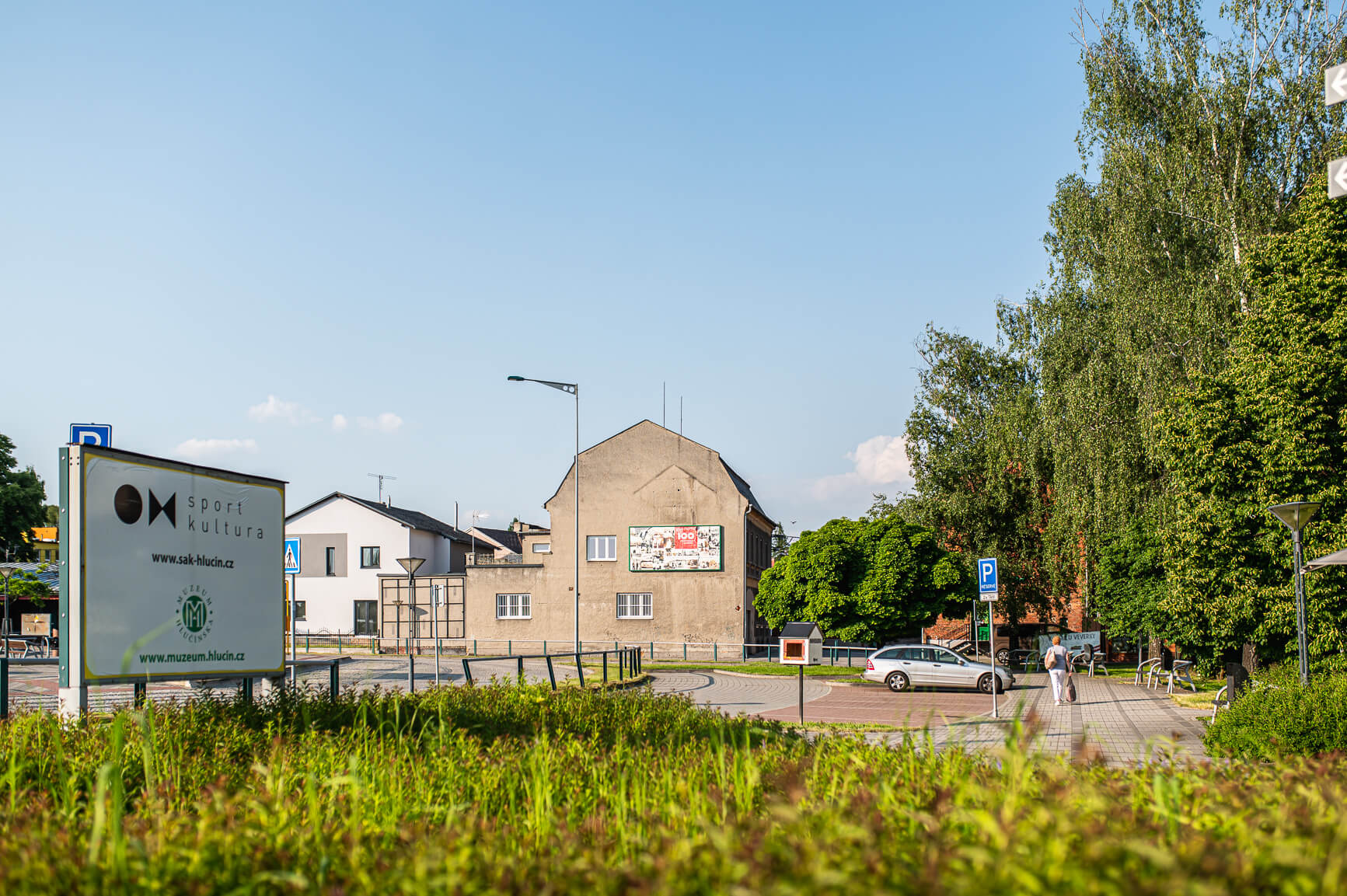
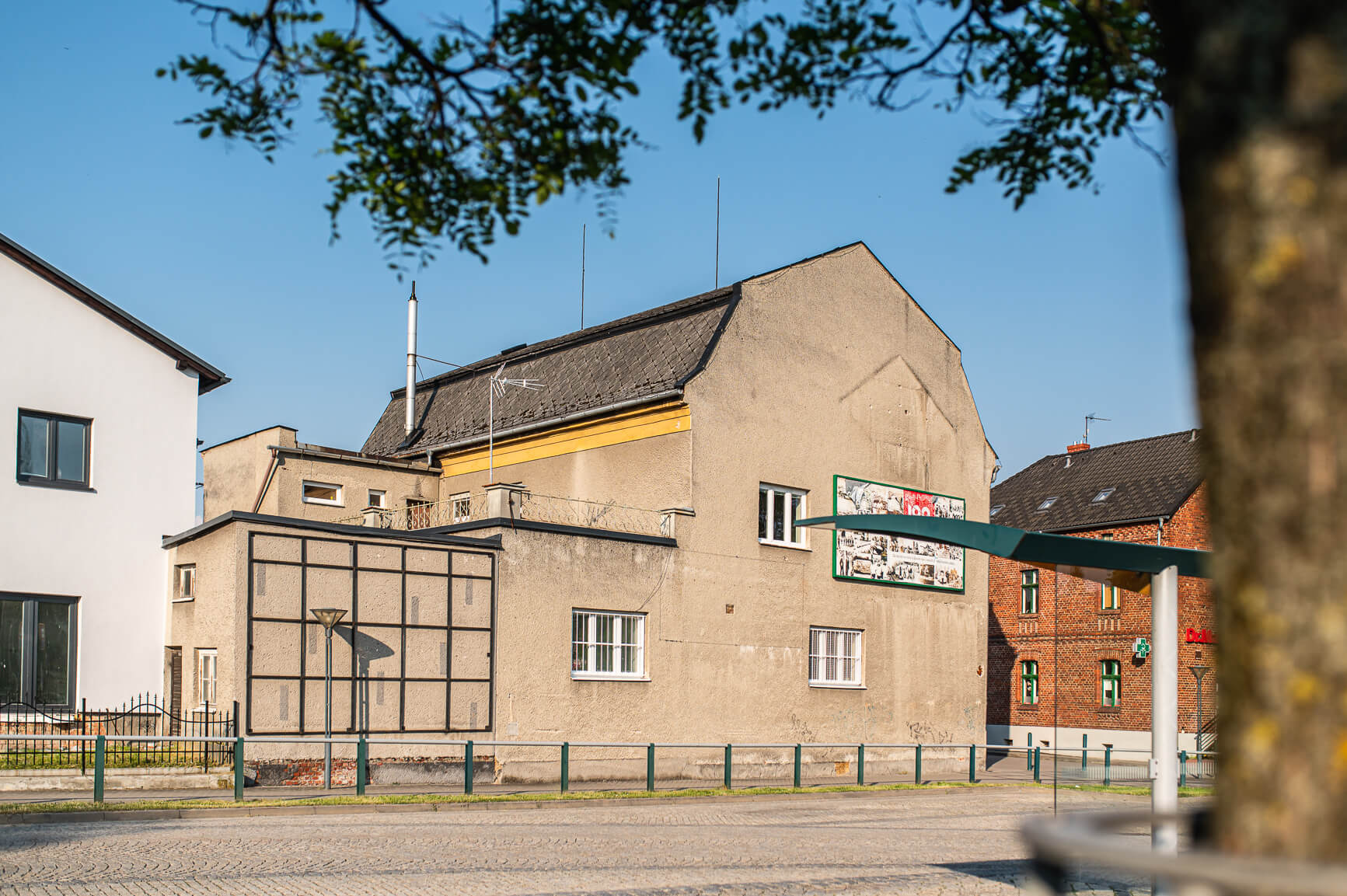
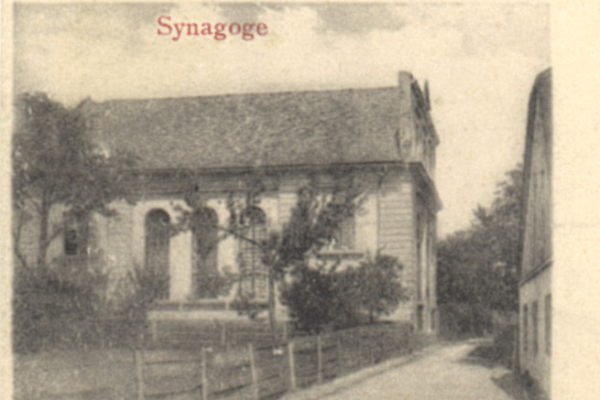
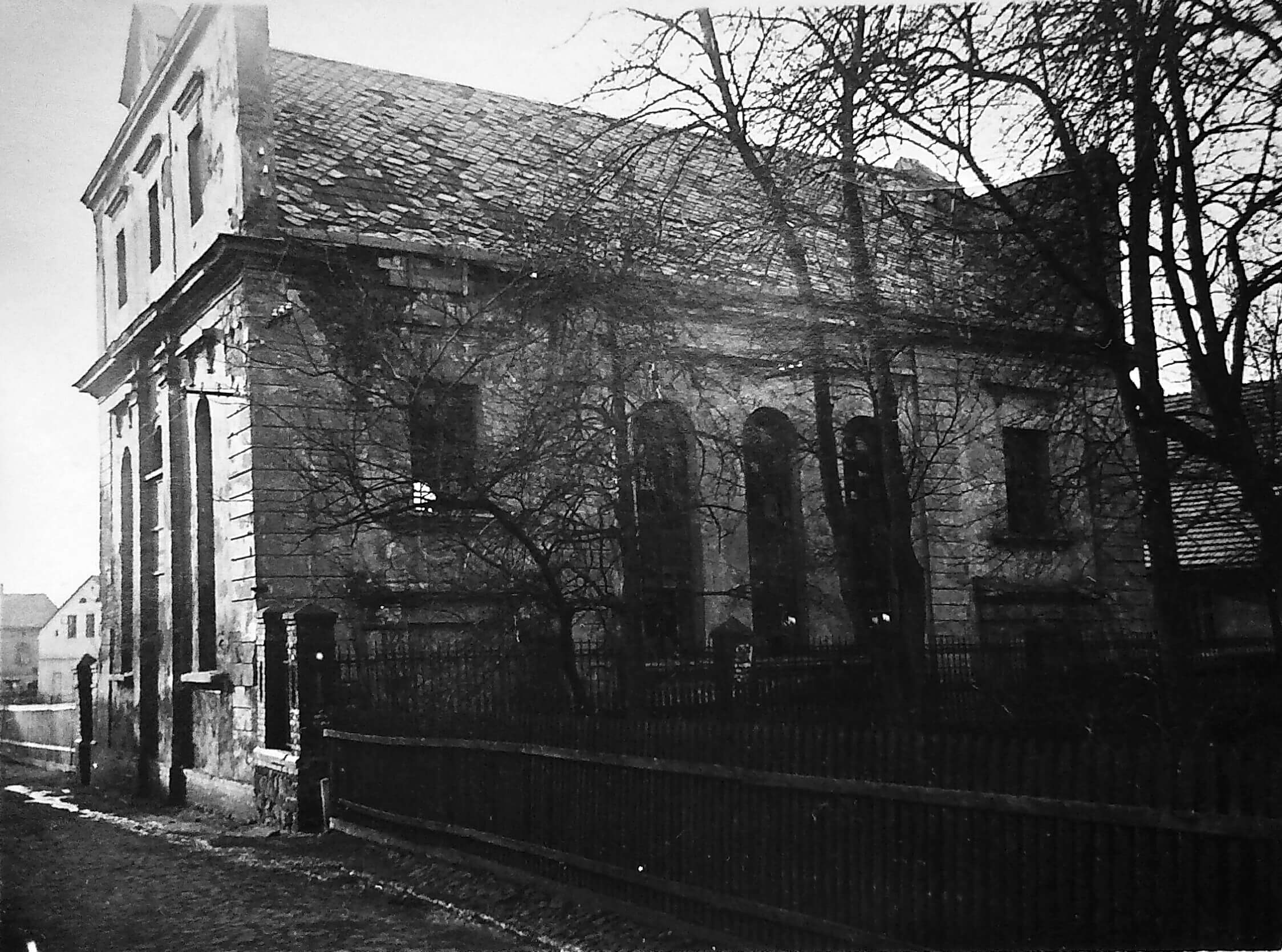
The synagogue on Na Valech Street was built between 1840 and 1843 on the initiative of Moritz Breitenfeld and Abraham Löbel Mandowsky. Jews settled permanently in the town only during the eighteenth century. From 1807, they held services in a modest prayer room at 36 Opavská Street. At the time the new synagogue was erected, the Jewish population of Hlučín had reached its height – in 1841, there were 224 Jews, about a tenth of the town’s inhabitants.
The synagogue was a small Classicist structure of rectangular plan, oriented eastwards. Its façade on Na Valech Street formed the rear of the prayer hall, so the entrances were placed on the long side walls rather than the street front, contrary to expectation. The three-bay front was dominated by a pair of pilasters supporting a richly moulded crowning cornice, with the corners accentuated by rusticated pilaster strips. Because the aron qodesh – the shrine for the Torah scrolls – stood behind the central axis, the façade was pierced only by two tall round-headed windows with hood moulds on delicate consoles. In the middle stood a stone plaque bearing the date and the names of the two leaders of the Jewish community (Breitenfeld and Mandowsky). A rectangular attic with three windows, the outer two blind, rose above the cornice, topped by a low triangular gable that echoed the pitch of the tall roof. Here, the synagogue’s symbols were displayed – probably the Tablets of the Law. The side elevations were divided into three bays by rusticated pilaster strips: the outer bays were pierced by doorways (blind on the east side) with rectangular windows above, each topped with a hood mould on consoles, while the central bay was dominated by three tall round-headed windows, likewise framed by hood moulds on consoles. Inside, fluted pilasters gave the space its rhythm, and the women’s gallery probably occupied only the rear section. The architect is unknown.
As the local community dwindled, its religious life faded. The Jewish school closed in 1872, and by 1900 the small congregation could no longer fund repairs to the decaying building. In 1927 the neglected and unused synagogue was sold to Samuel Elitz of Přívoz, who used it for two years as a workshop. Its next owner demolished this architecturally refined and stylistically singular building in 1931.