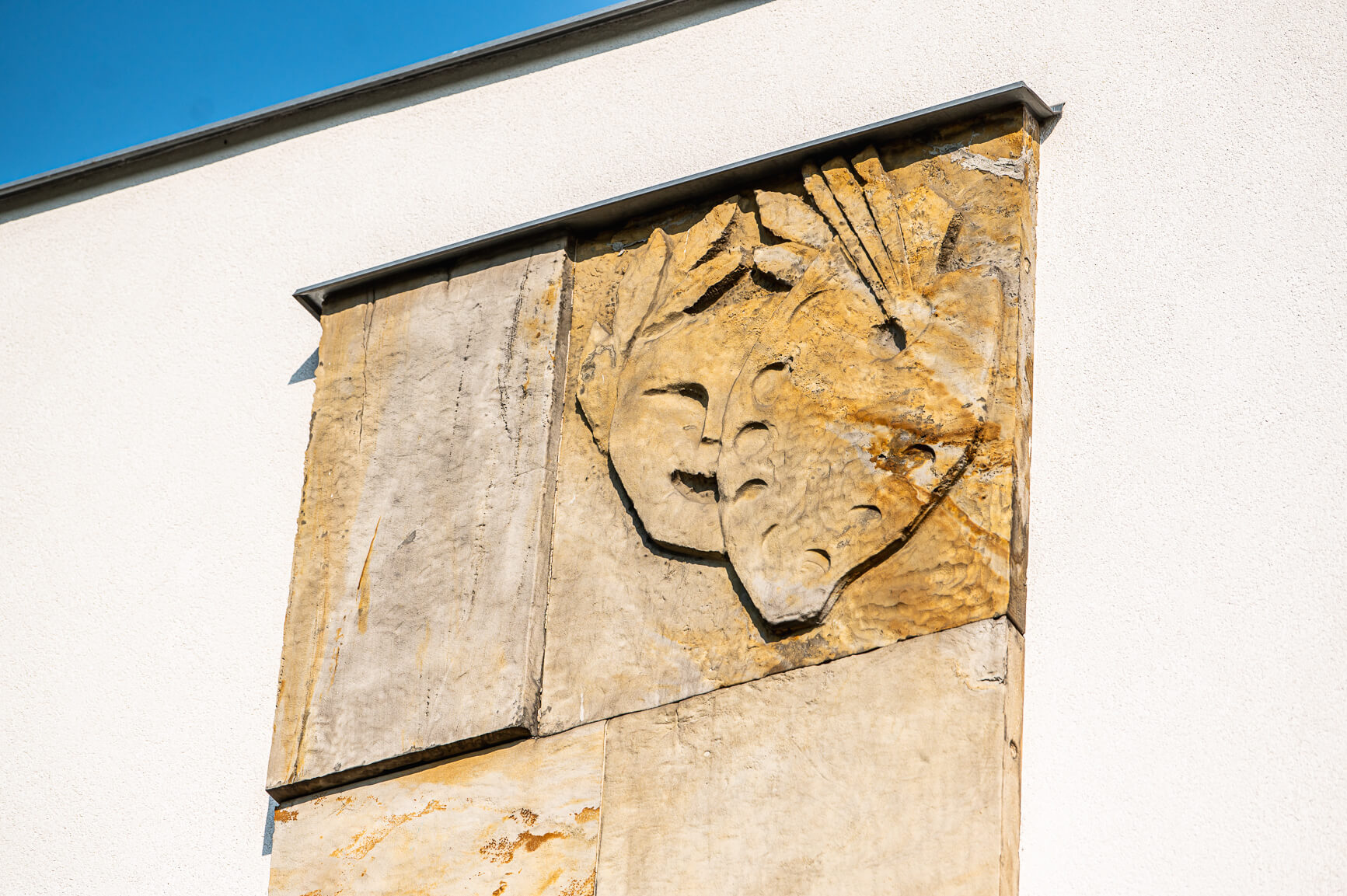
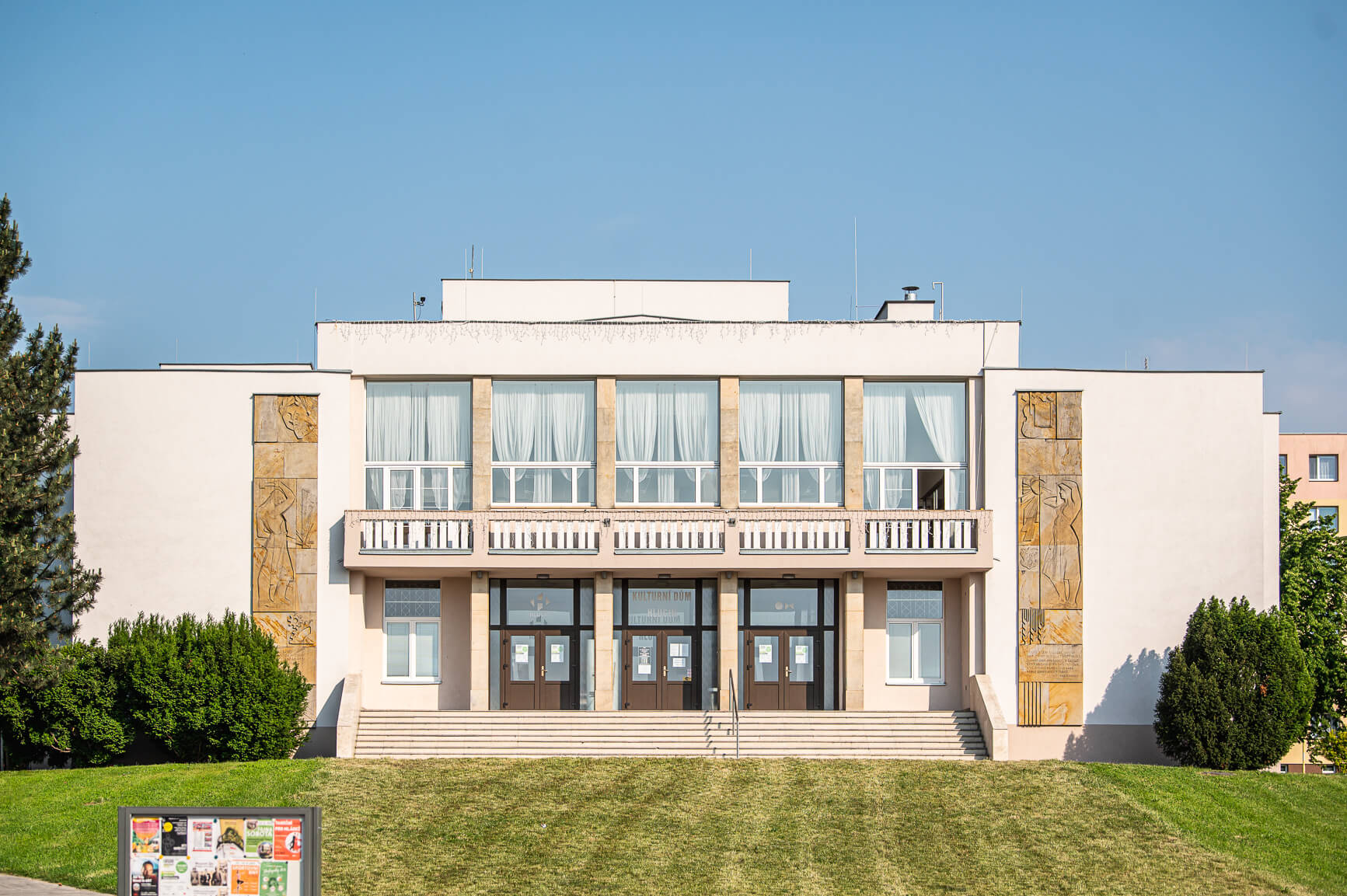
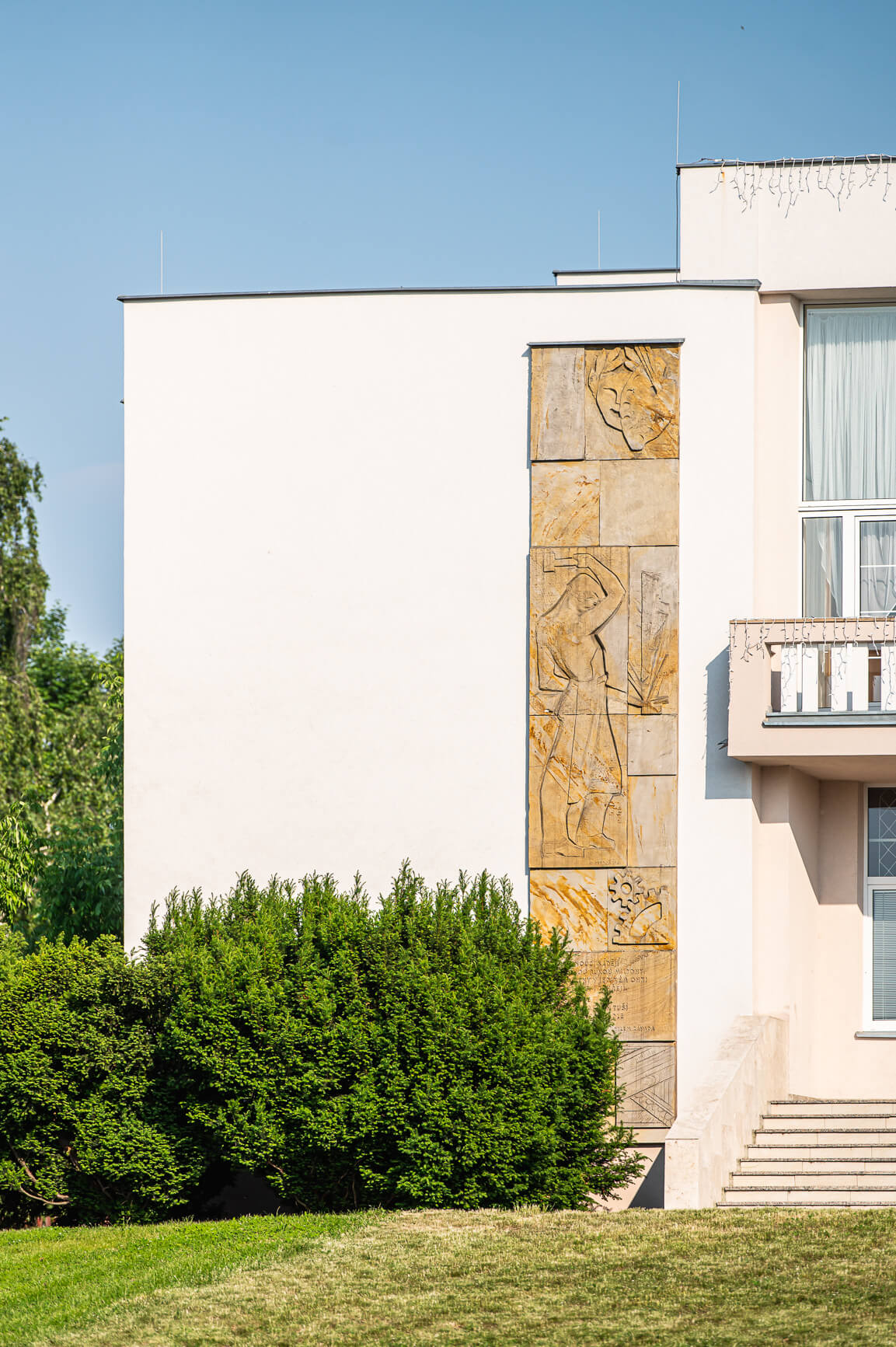
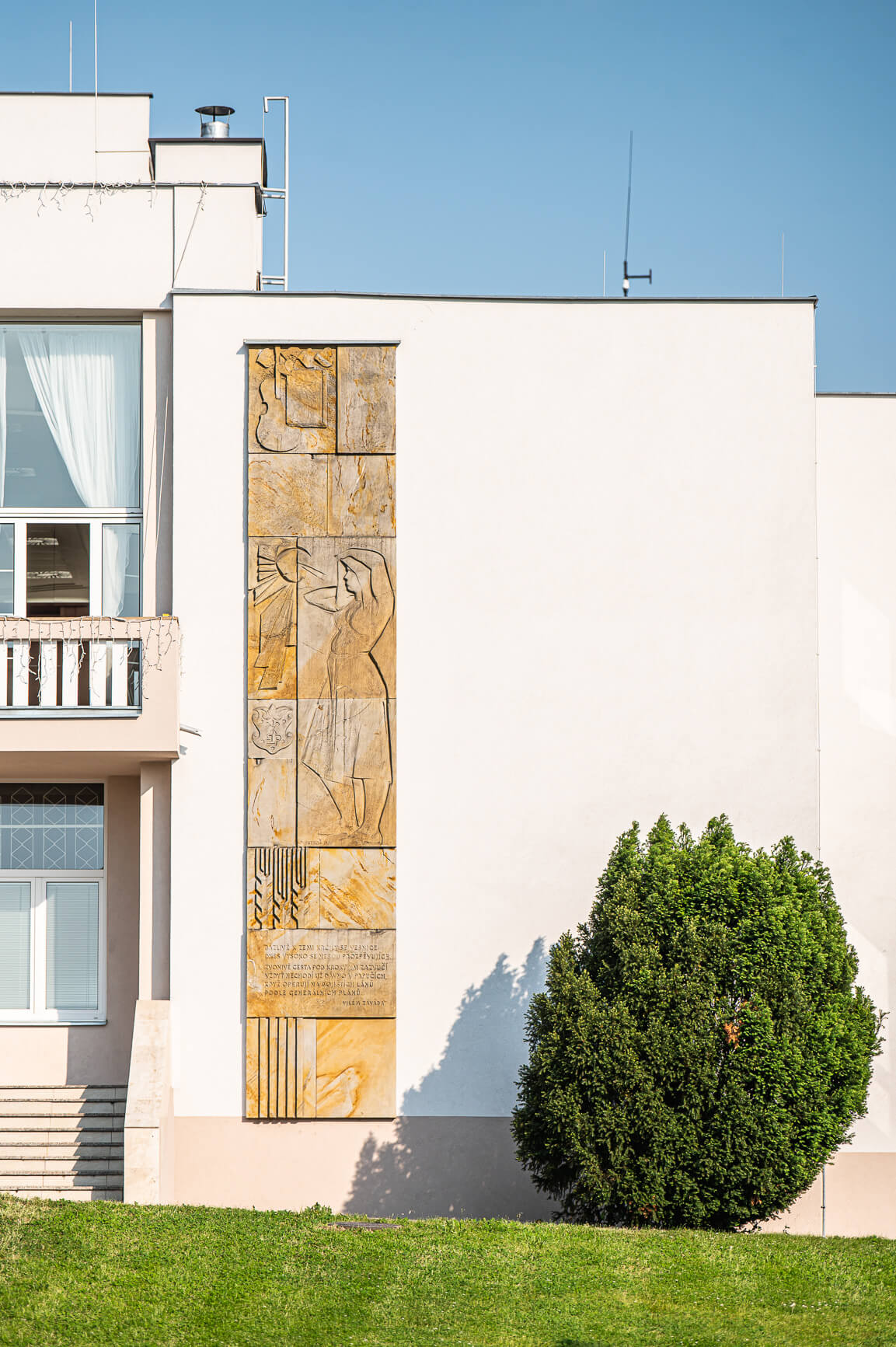
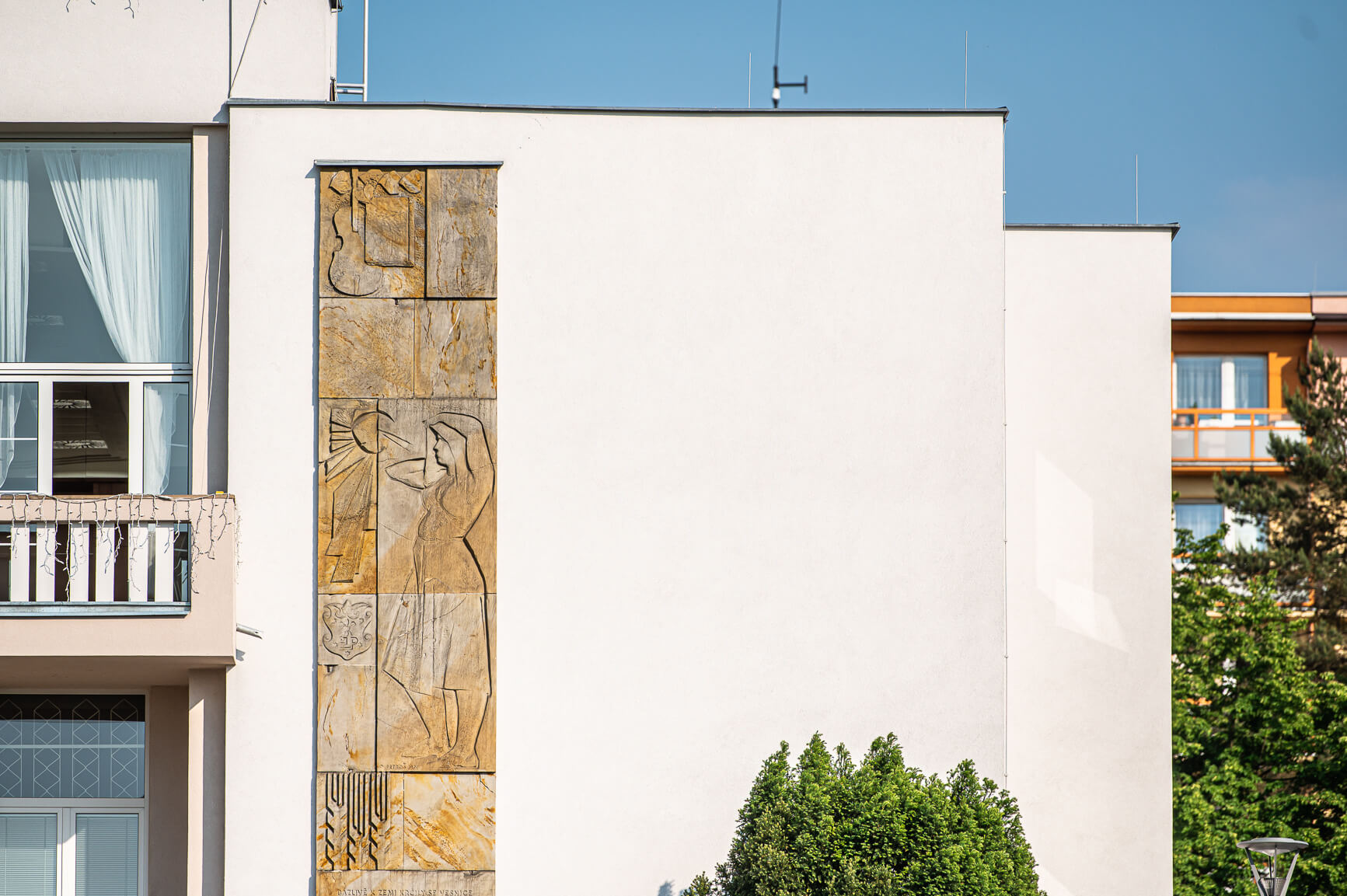
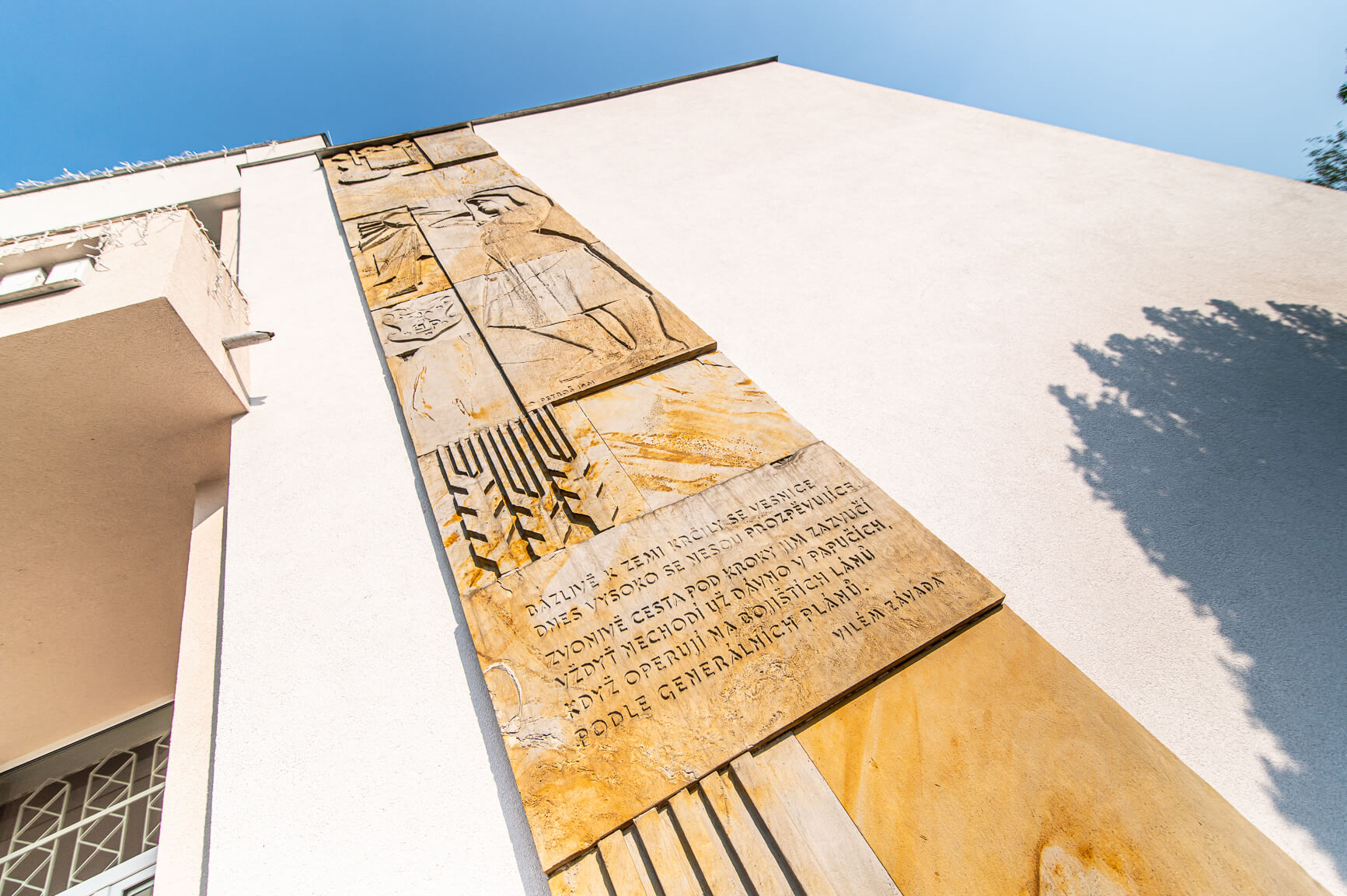
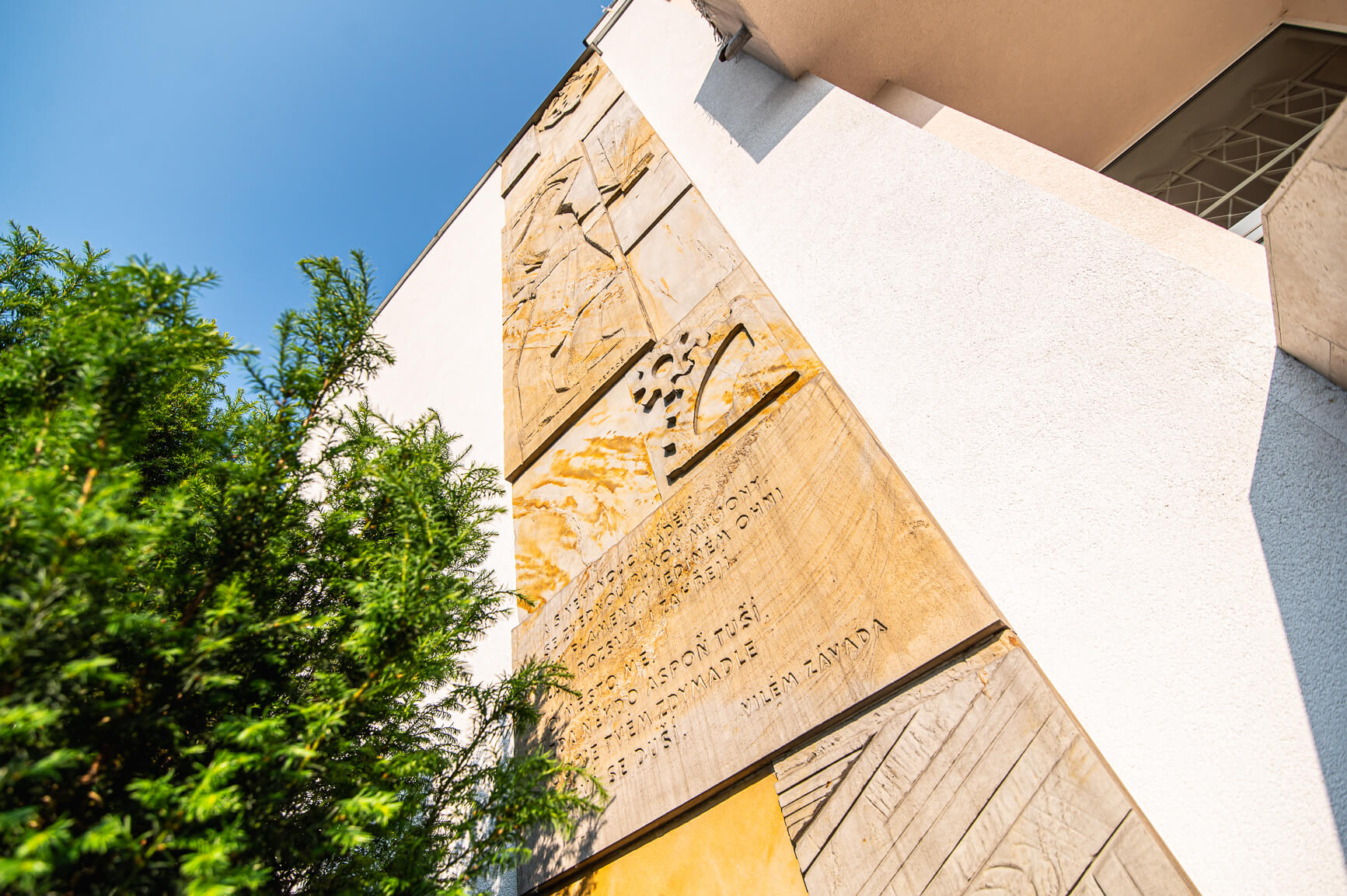
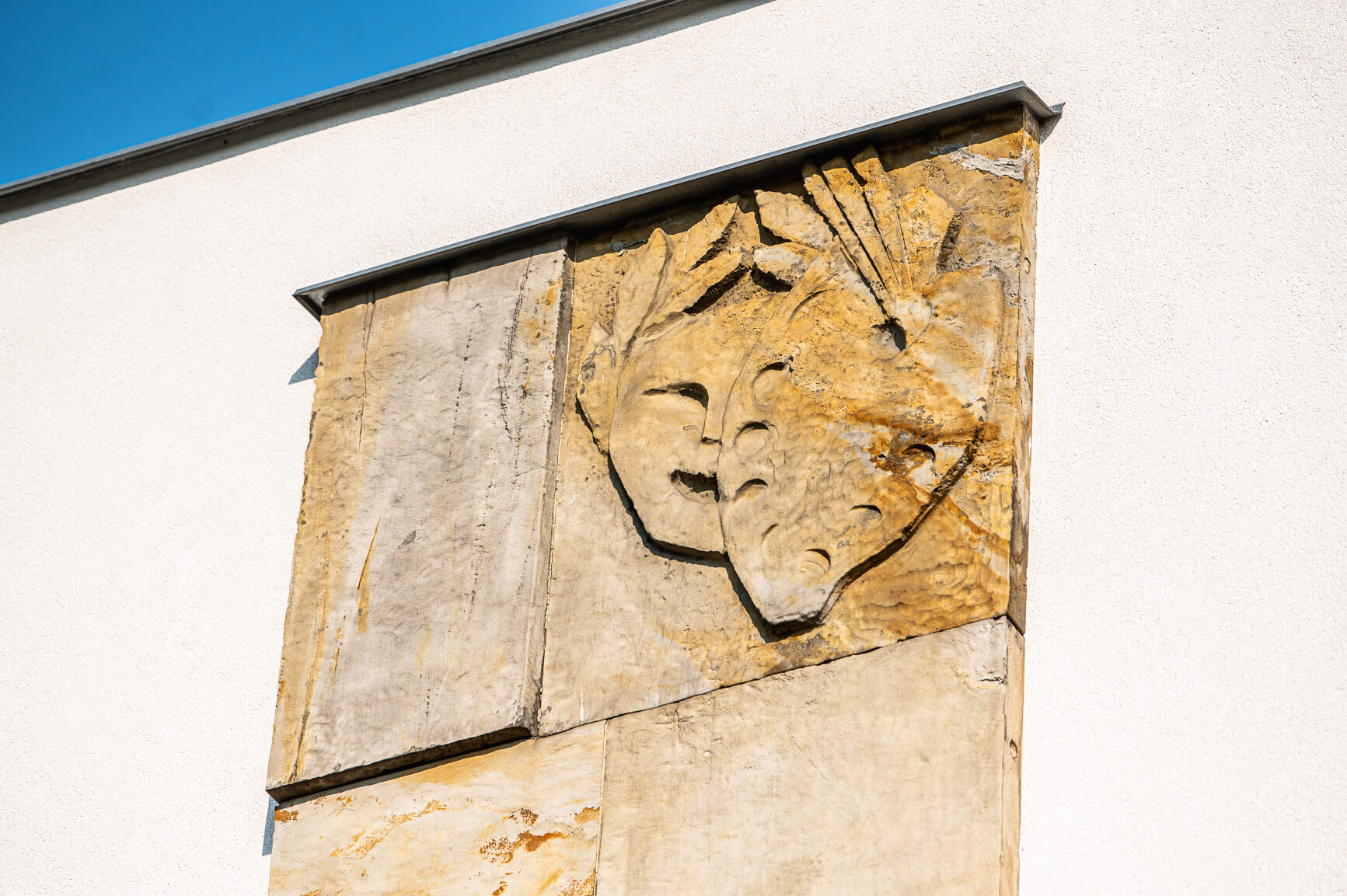
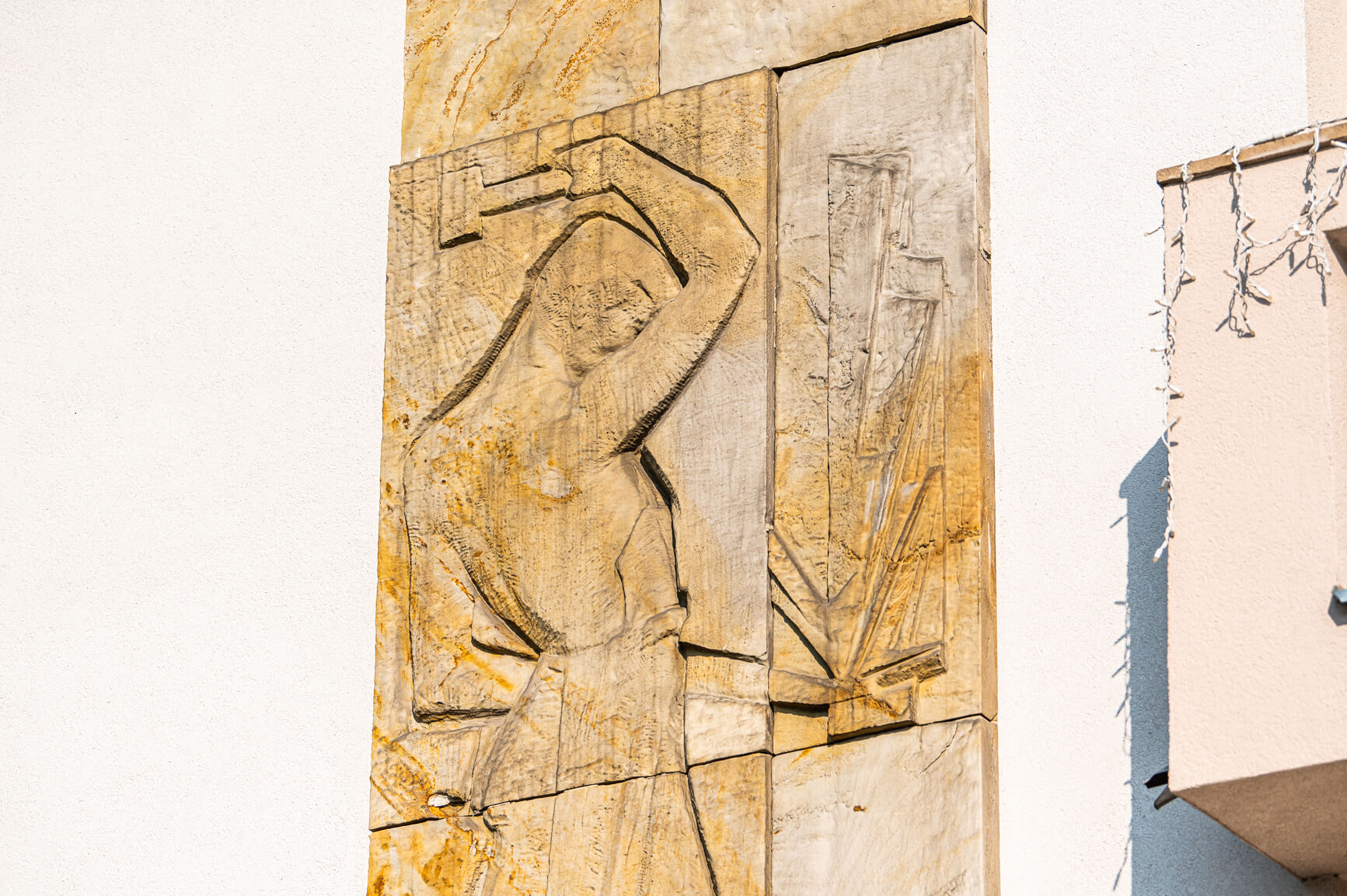
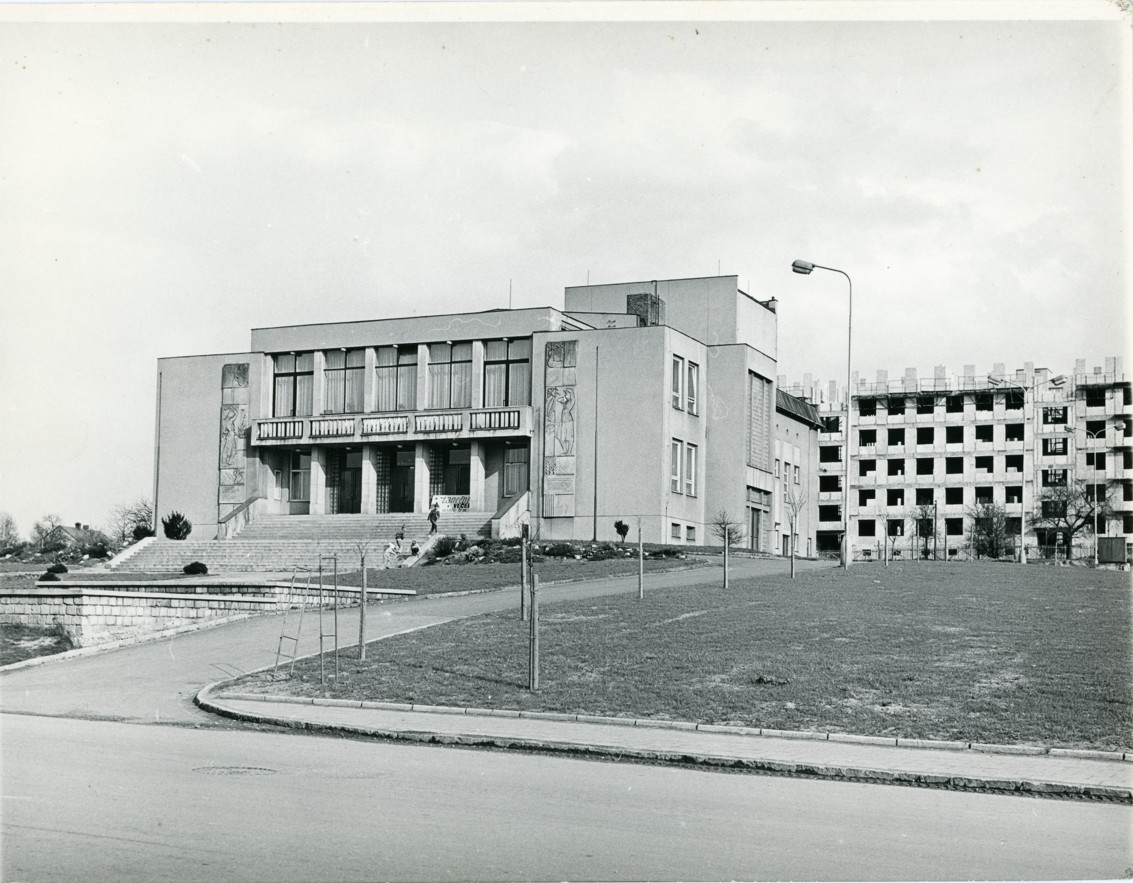
Hlučín Cultural Centre was built between 1958 and 1961 according to a design by the Ostrava architect Evžen Tošenovský (1924–2002) on what was then a newly laid-out ring road for the town. Architecturally, it is a restrained traditionalist building of symmetrical, tiered composition, its five-bay entrance façade flanked by two narrow sandstone reliefs eight metres high. These were the work of Prague sculptor Otakar Petroš (b. 1924), a graduate of the Academy of Fine Arts in Prague who was originally from the Moravian village of Sviadnov. The thoroughly conventional iconography celebrates heavy industry – particularly metallurgy (a blacksmith, cogwheels, and coal) – and agriculture (a peasant girl, the sun, and ears of grain). The upper parts of the reliefs also allude to culture and art (theatre masks, an artist’s palette, a violin, and a book). The connection with Hlučín is underscored by the presence of the town’s coat of arms. At the bottom are inscription panels bearing verses by the regional poet Vilém Závada (1905–1982), a native of Hrabová.
Reliefs on the façade of the Cultural Centre
ArchitectOtakar Petroš
Construction1961
AddressOstravská 124/18