PULPIT
uthors unknown – Wood – Late seventeenth century and 1740s
The Baroque pulpit consists of two stylistically disparate parts. The lower section, namely the preaching platform with its parapet, dates apparently from the late seventeenth century, while the canopy with beveled corners and a gently curved cornice reflects the influence of the high Baroque style and can therefore be dated to the mid-eighteenth century, specifically to the year 1748, as recorded in the town chronicle.
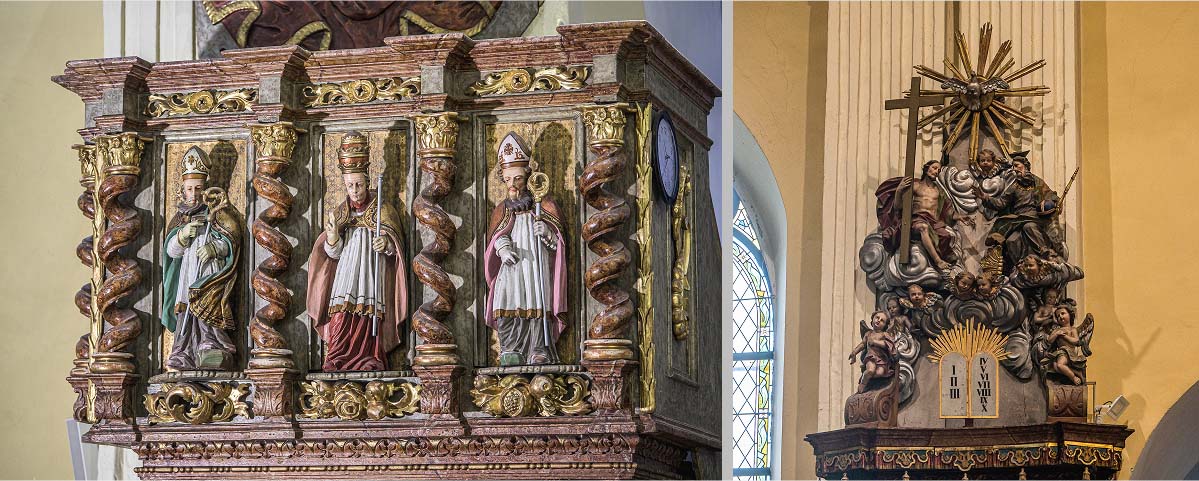
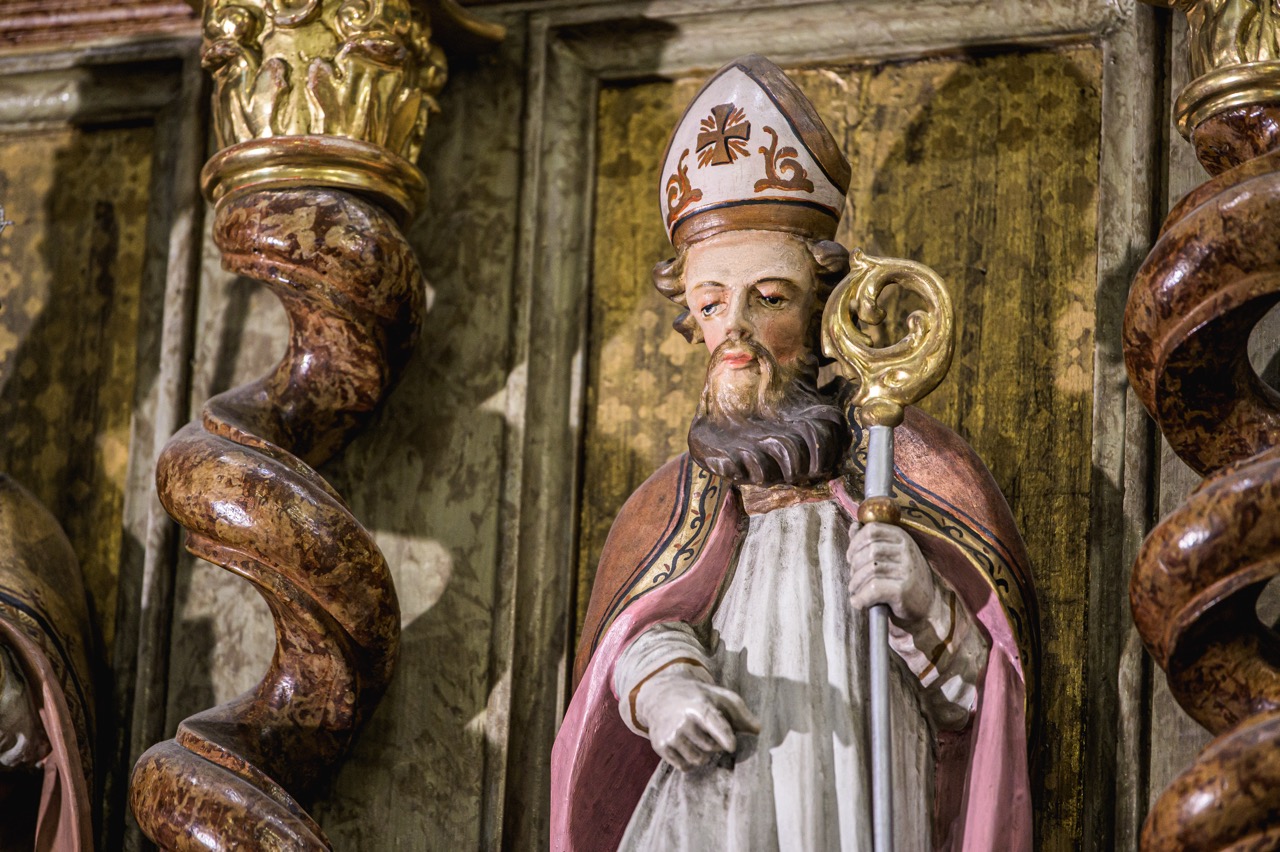
The parapet is articulated with twisted columns that support the shaped cornice of the preaching platform. Between the individual columns are positioned statues of the four Western Church Fathers, whose theological works form the foundation of Catholic doctrine. These are St Jerome (left side), St Ambrose, St Gregory, and St Augustine (at the front).
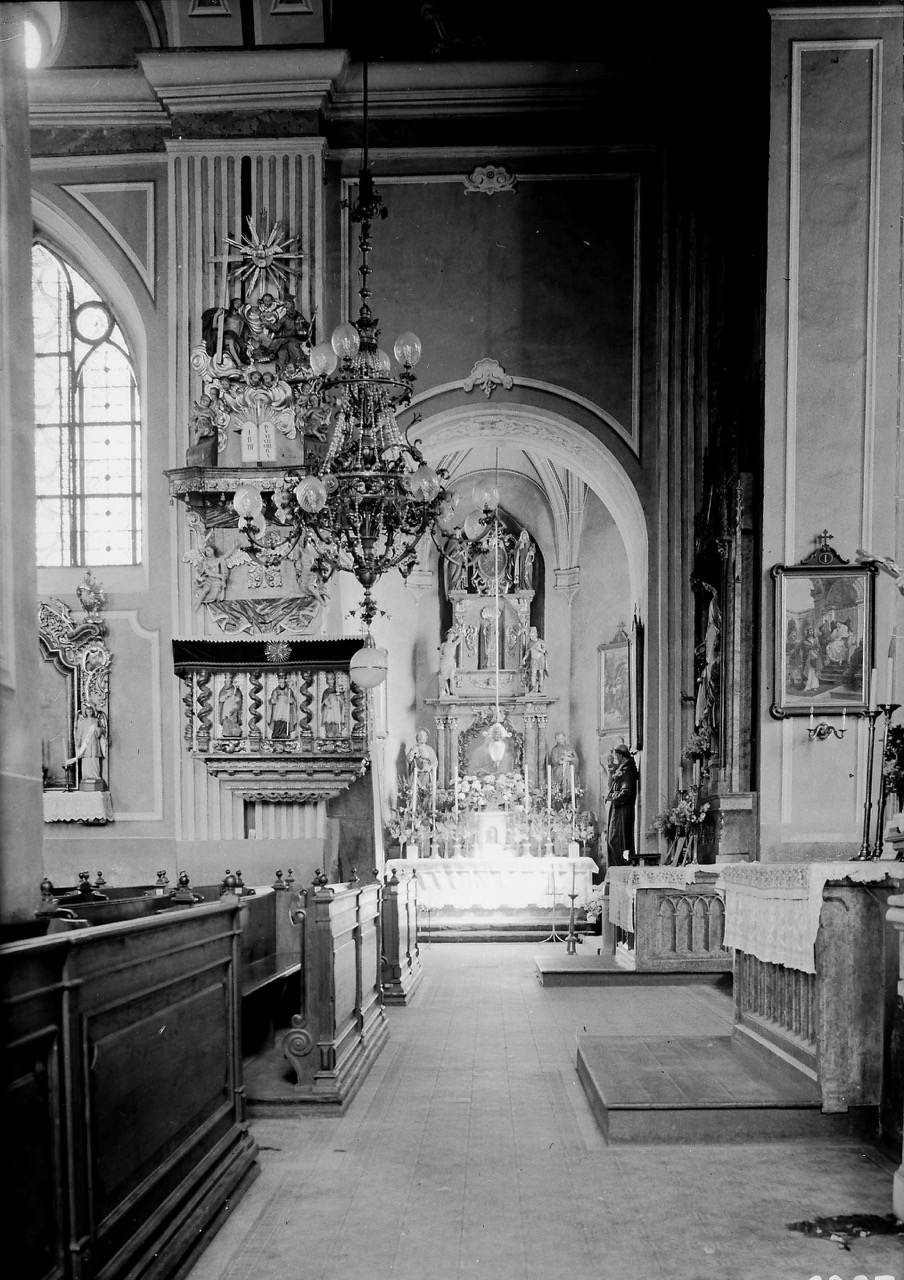 View of the Chapel of St Anne, period photograph, 1930s
The Holy Four
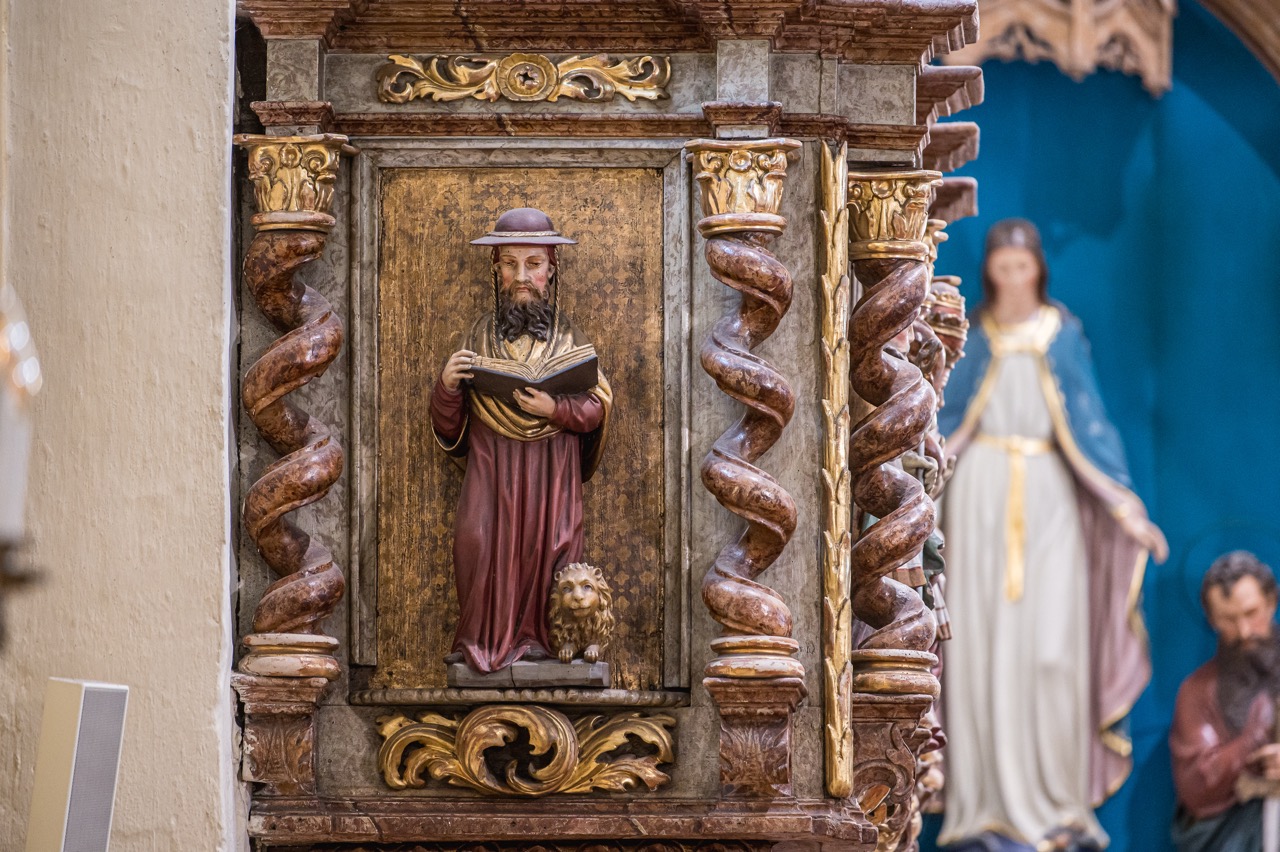
St Jerome
Jerome was the author of the Latin translation of the Bible from the turn of the fourth and fifth centuries, known as the Vulgate. For this reason, he holds a book as his attribute. He is clothed in cardinal’s vestments, although he never actually held the title of cardinal. At his feet lies a lion, an allusion to the legend according to which Jerome extracted a thorn from the paw of a wounded lion, whereupon the animal became his faithful companion during the time the saint lived in solitude as a hermit.
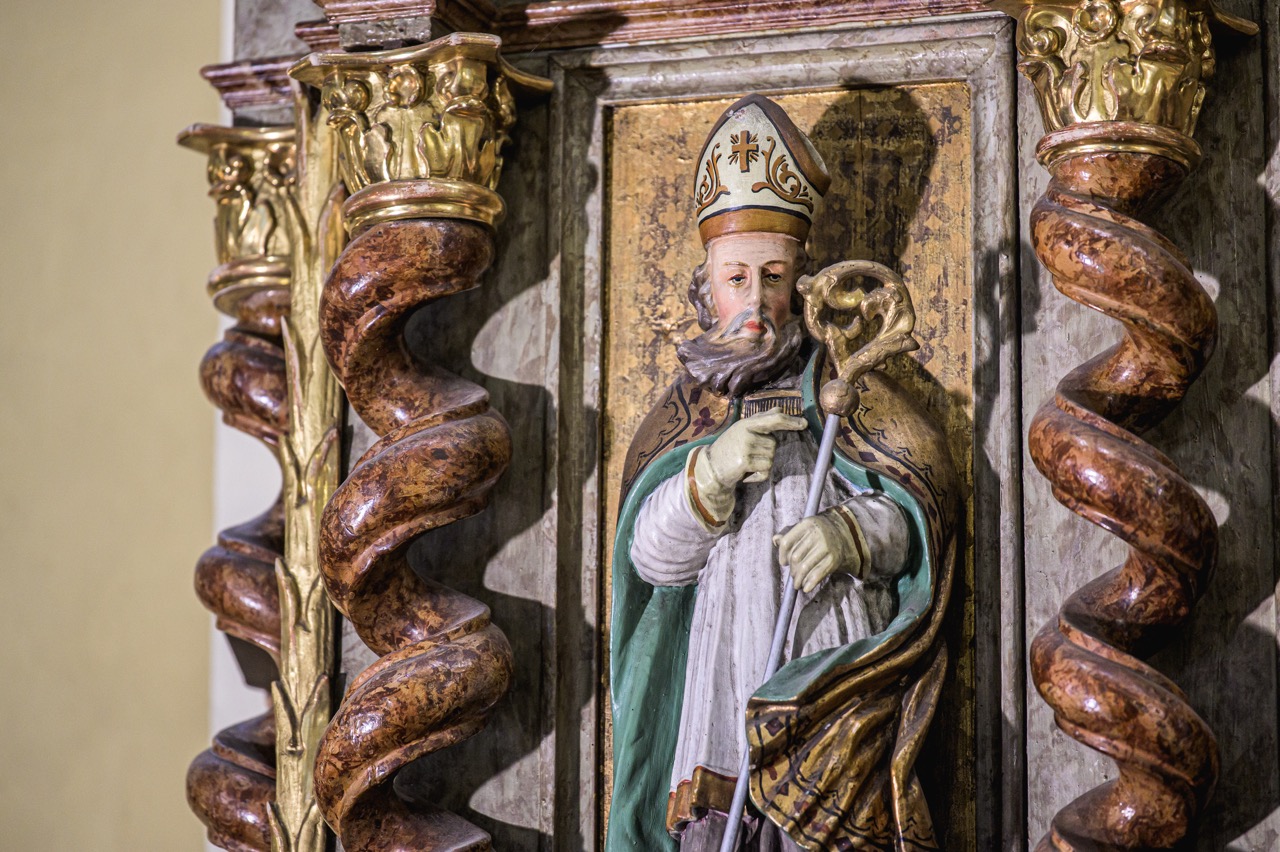
St Ambrose
Bishop of Milan and one of the greatest authorities of Western Christianity in the fourth century. He championed the independence of the Church, opposed ecclesiastical heresies such as Arianism, and introduced the practice of hymn singing in church liturgy. The most renowned of these is the Te Deum. In this depiction, he is shown without any characteristic attribute (customarily a beehive), clothed only in episcopal vestments bearing a mitre and holding a crosier.
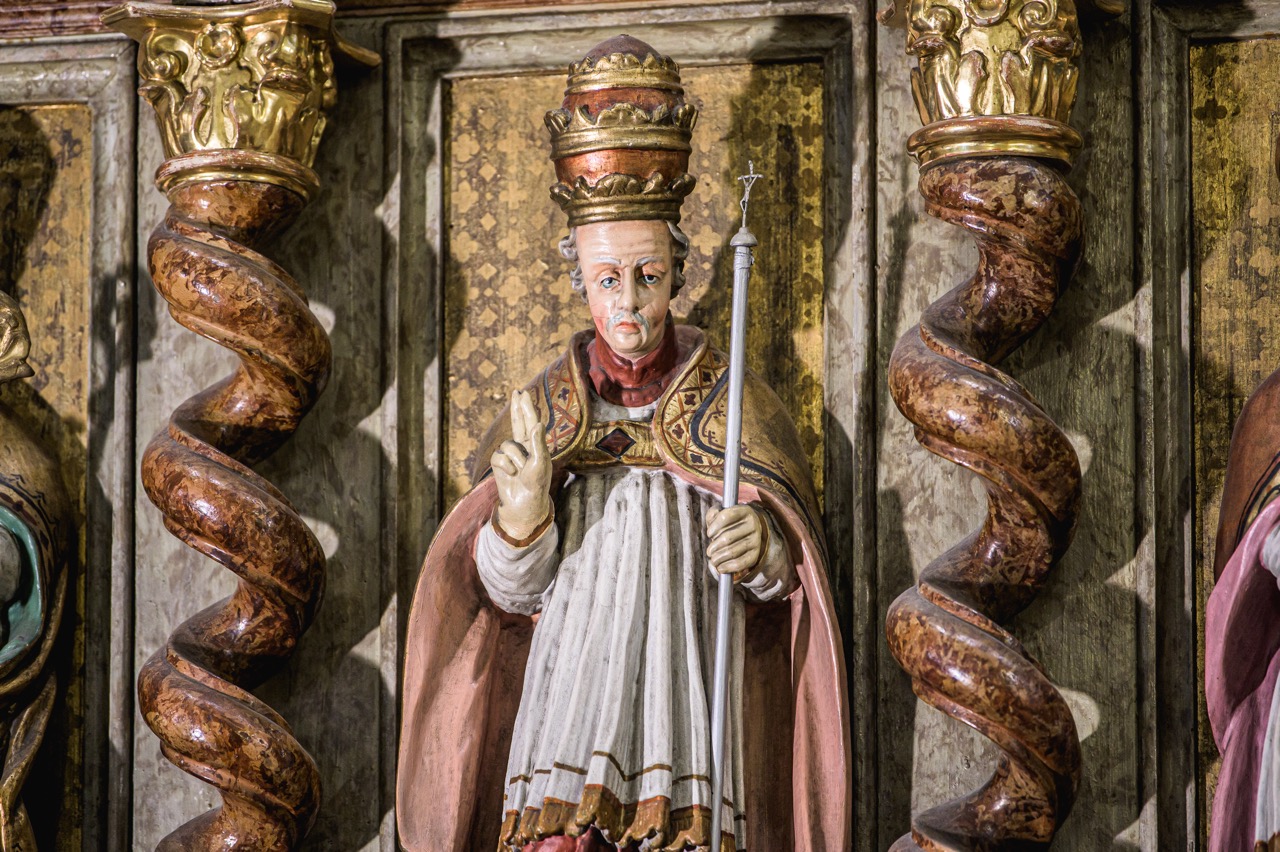
St Gregory the Great
Pope at the turn of the sixth and seventh centuries, Gregory was a diplomat who resolved disputes exclusively through peaceful means. He carried out significant reforms of the liturgy and is credited with the development of liturgical chant, commonly known as Gregorian chant. In this depiction, he is presented with the insignia of papal authority—a cross and a tiara—and is shown blessing with his right hand.
St Augustine
The most significant Christian philosopher of antiquity, Augustine did not convert to Christianity until adulthood, following his encounter with Ambrose, the Bishop of Milan, in the late fourth century. Shortly thereafter, he himself became bishop of Hippo Regius in North Africa. His theological writings form the foundational pillars of Christian philosophy. Although Augustine possesses numerous attributes in Christian iconography (a burning heart, a book, an infant, among others), he is depicted here solely in his role as bishop and is therefore indistinguishable from St Ambrose.
The Canopy
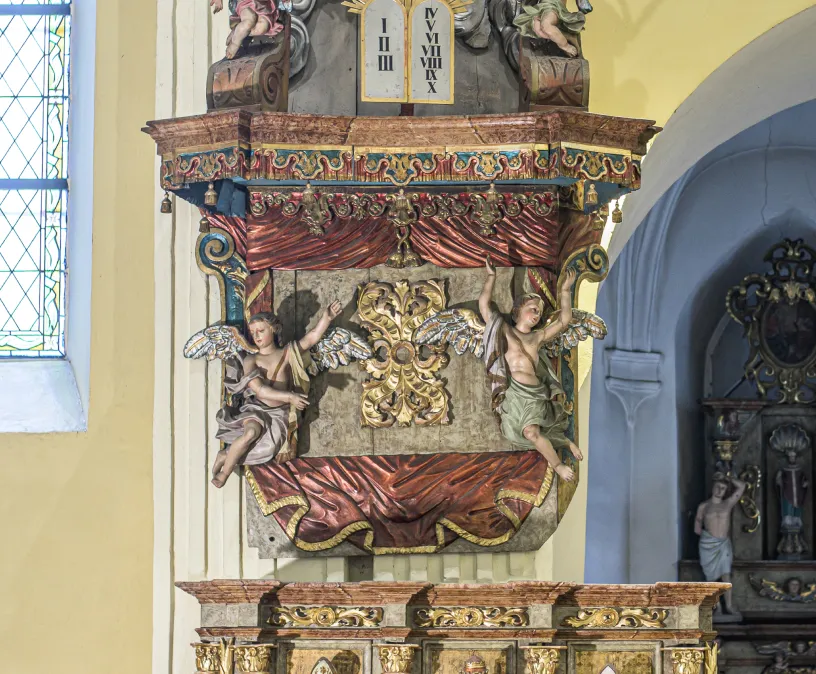
The canopy is adorned with drapery, a pair of putti, and a decorative cloth suspended from the cornice. At the apex of the pulpit rest the Tablets of the Decalogue, surrounded by clouds, upon which is enthroned the Holy Trinity: God the Father, holding an orb and scepter as symbols of sovereignty; the Son, depicted as the Risen Christ bearing the visible marks of the Passion and the cross; and the Holy Spirit, hovering above both in the form of a dove radiating light. The clouds are further embellished with figures of angels and cherubs.
The pulpit is richly polychromed and gilded in its details. The decorative painting of the architectural elements imitates marble. Since the liturgical reforms of the Second Vatican Council, the pulpit has no longer been used for preaching.