Jewish Cemetery
1814 (restored 2009)
Rovniny
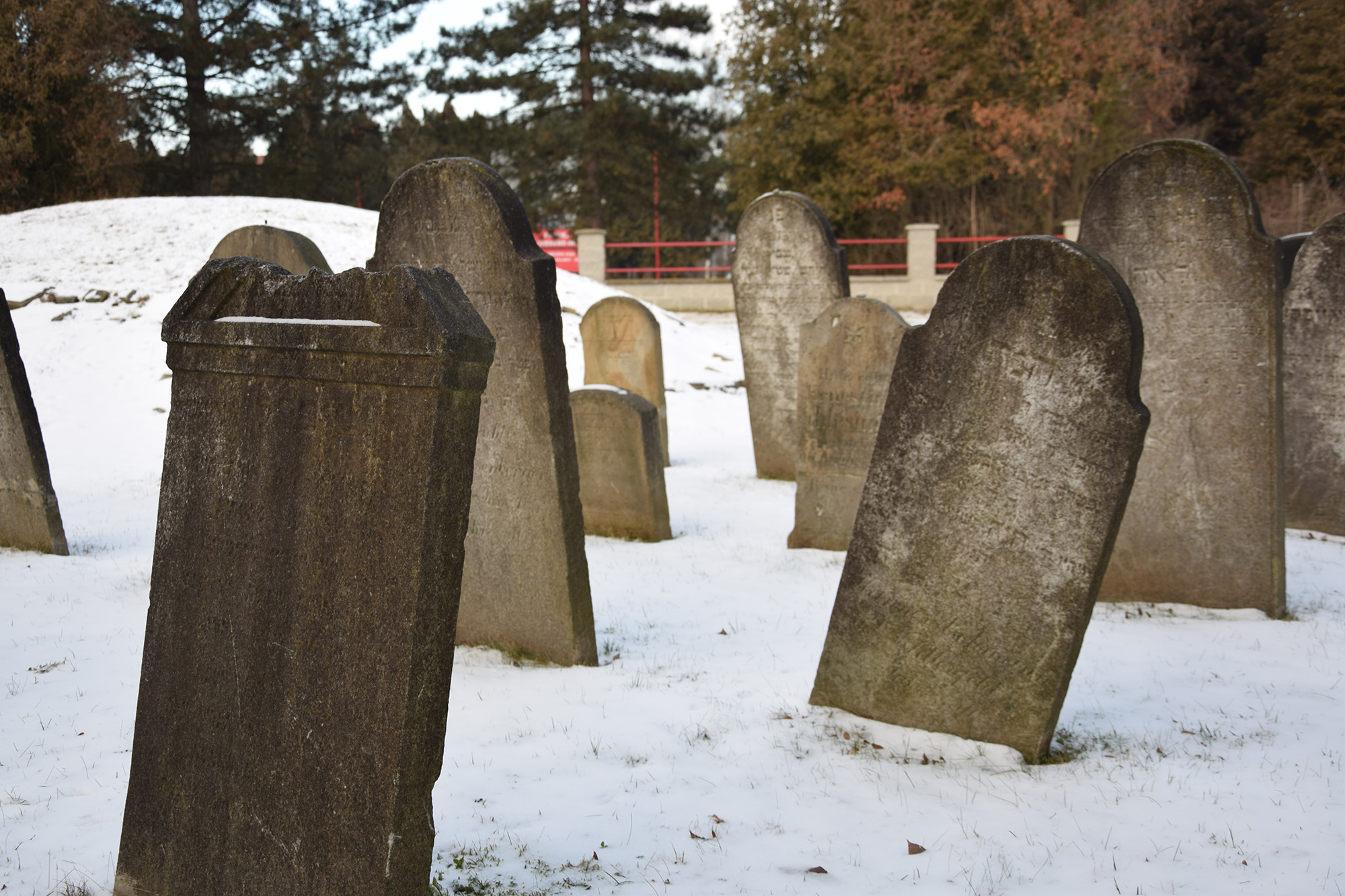
One of the few surviving reminders of Hlučín’s Jewish community is its cemetery. Founded in 1814, two years after Jews in Prussia became free citizens, it recalls a community that emerged in the eighteenth century and flourished in the mid-nineteenth, when Jews made up a tenth of the town’s population. Following emancipation in neighbouring Austria (1848), however, most families gradually moved to nearby Ostrava. After the First World War, only twenty people in Hlučín still declared themselves Jewish.
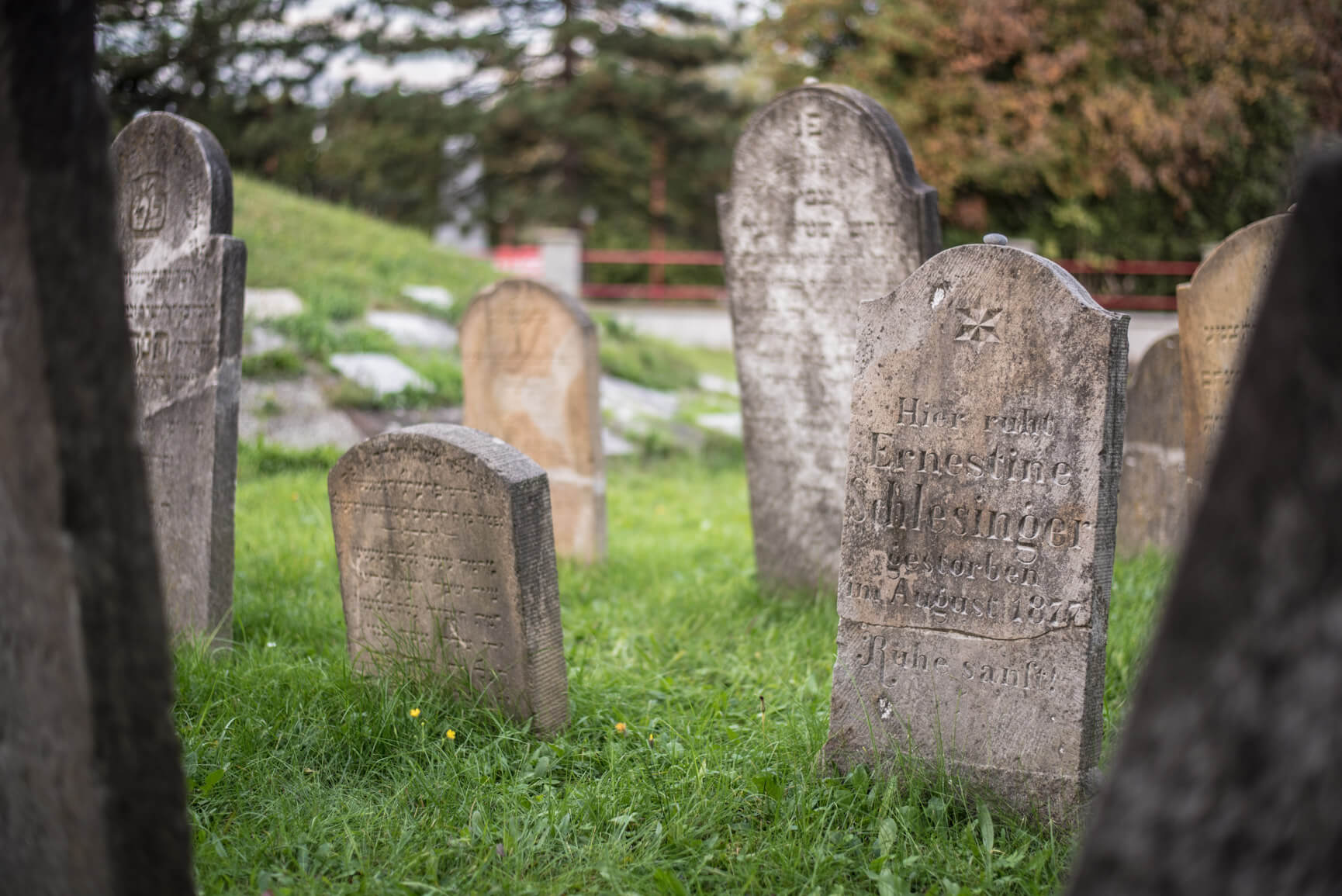
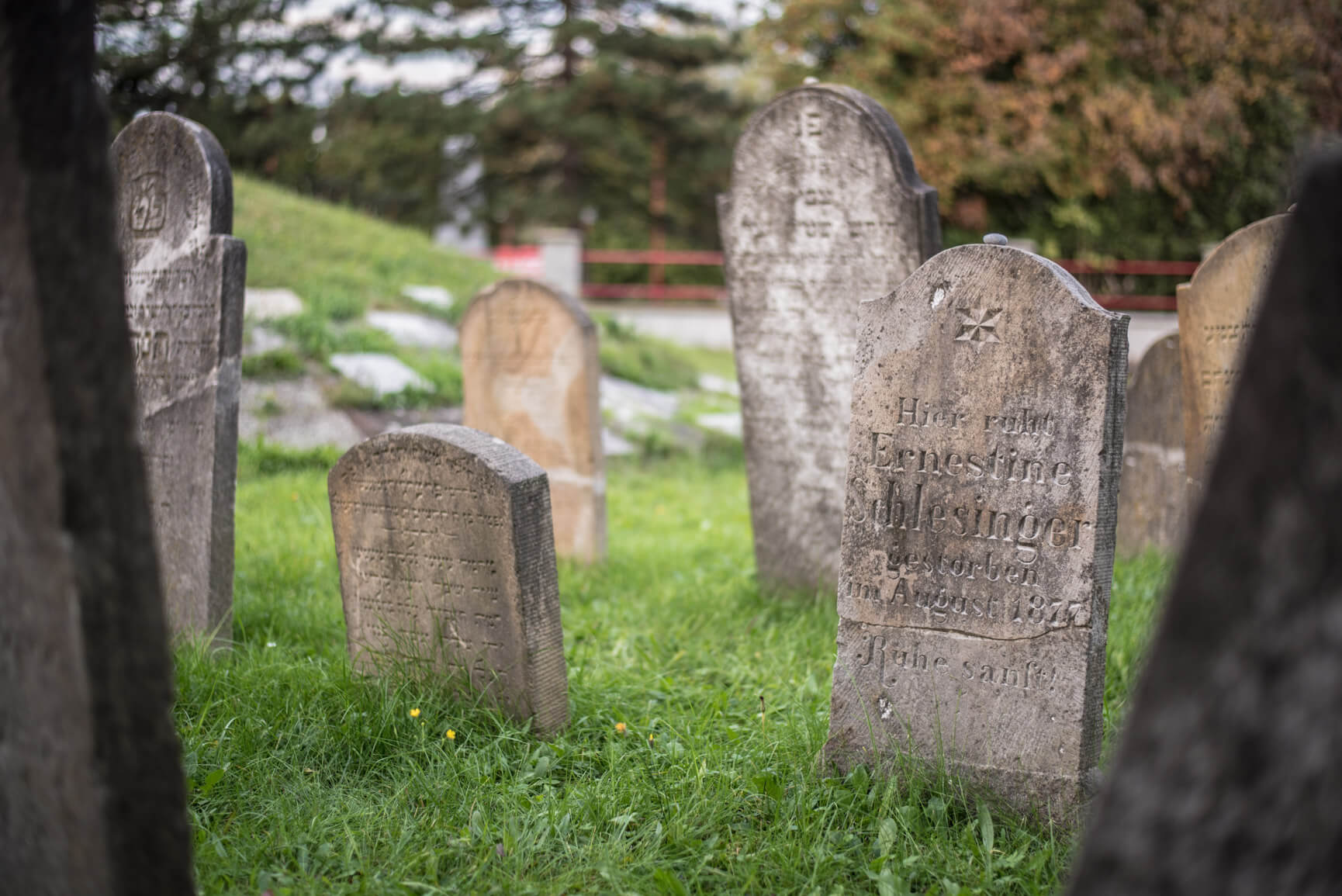
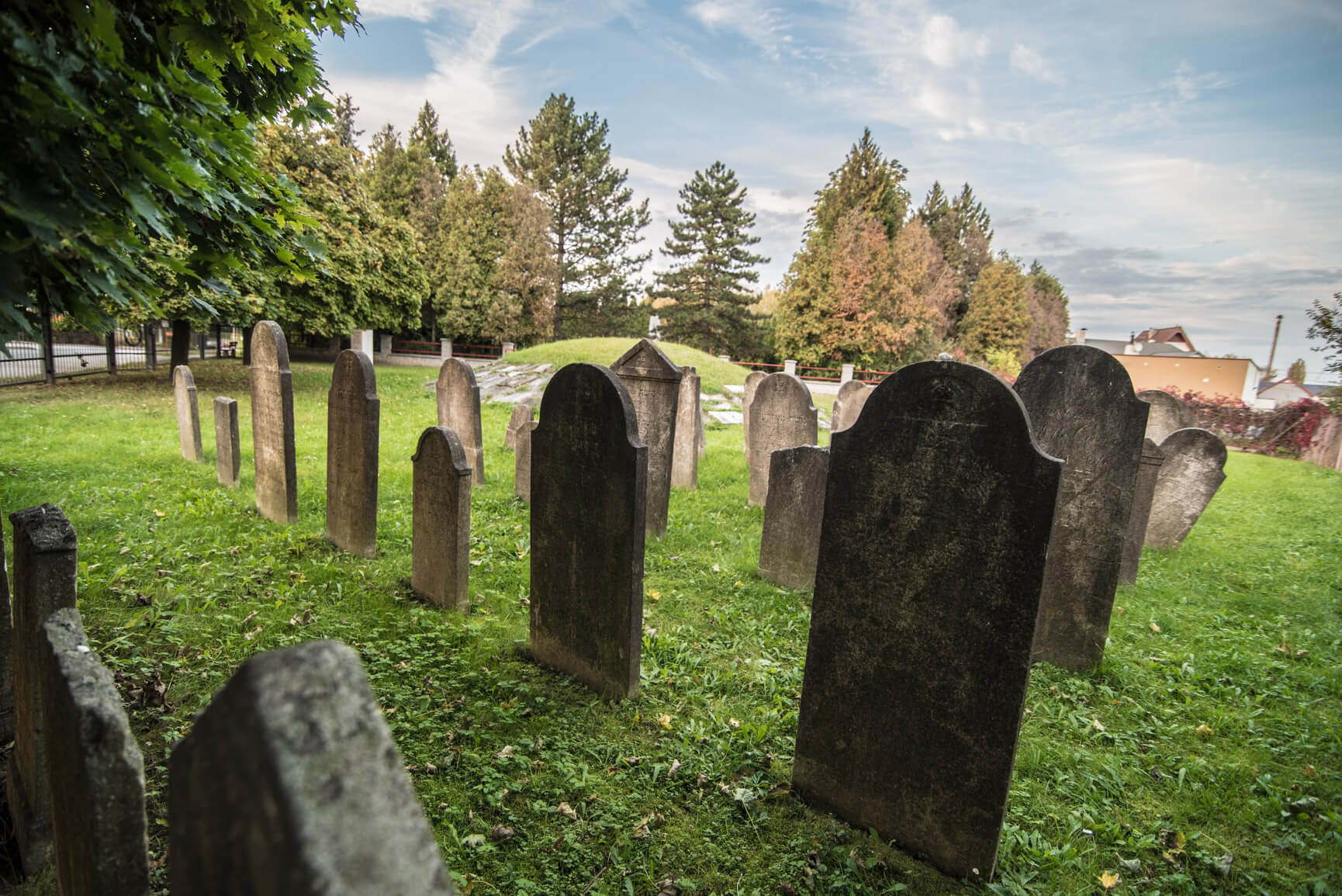
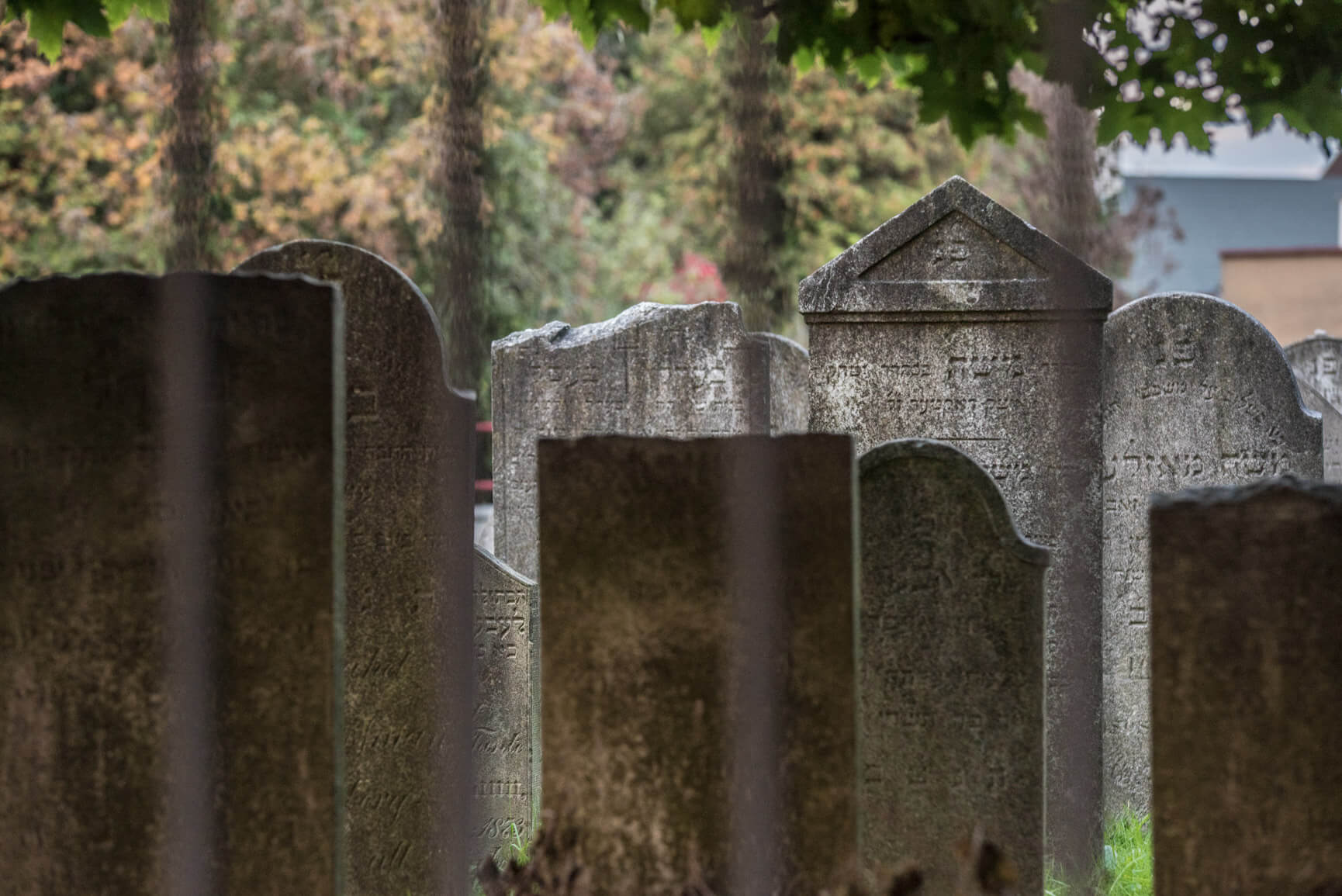
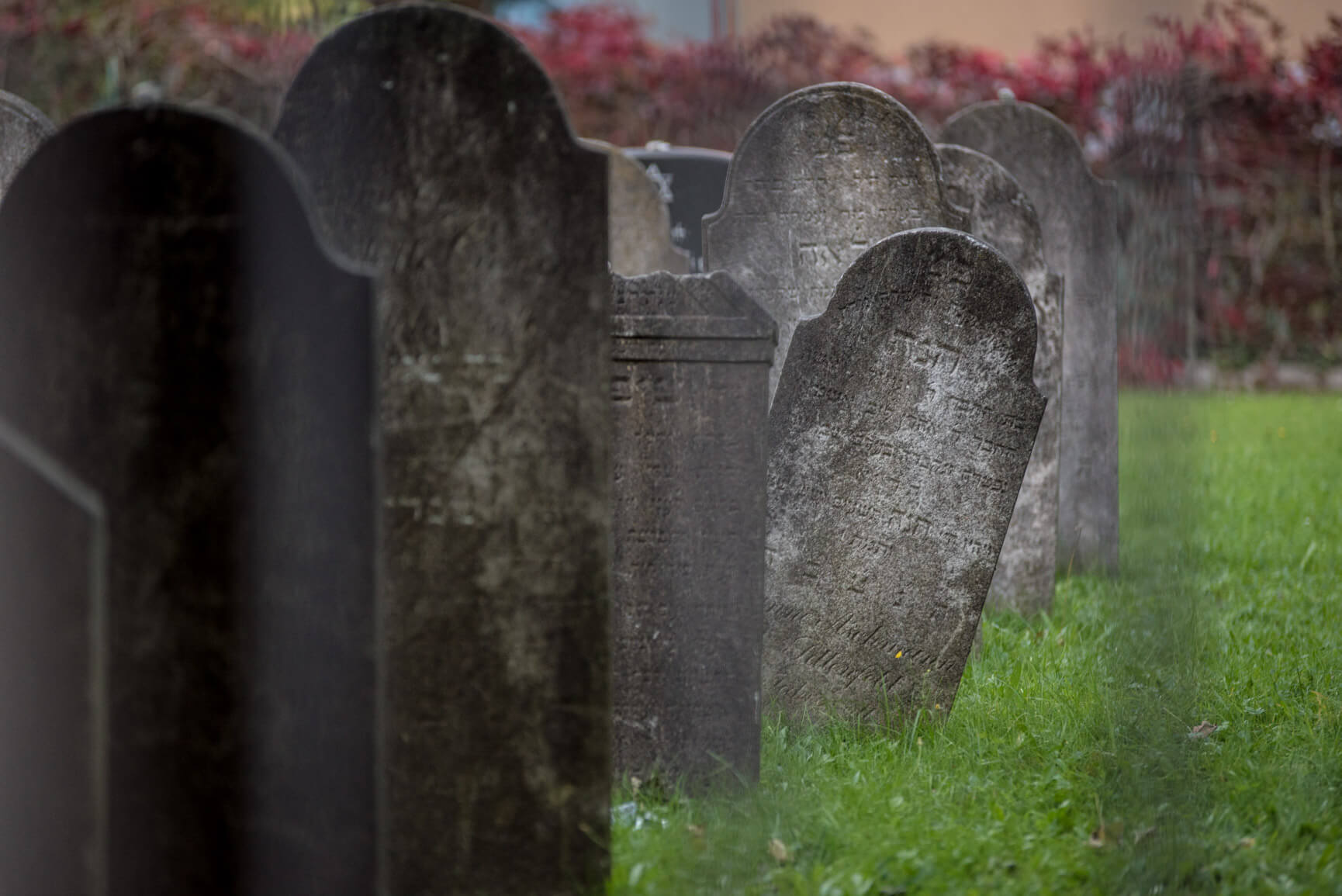
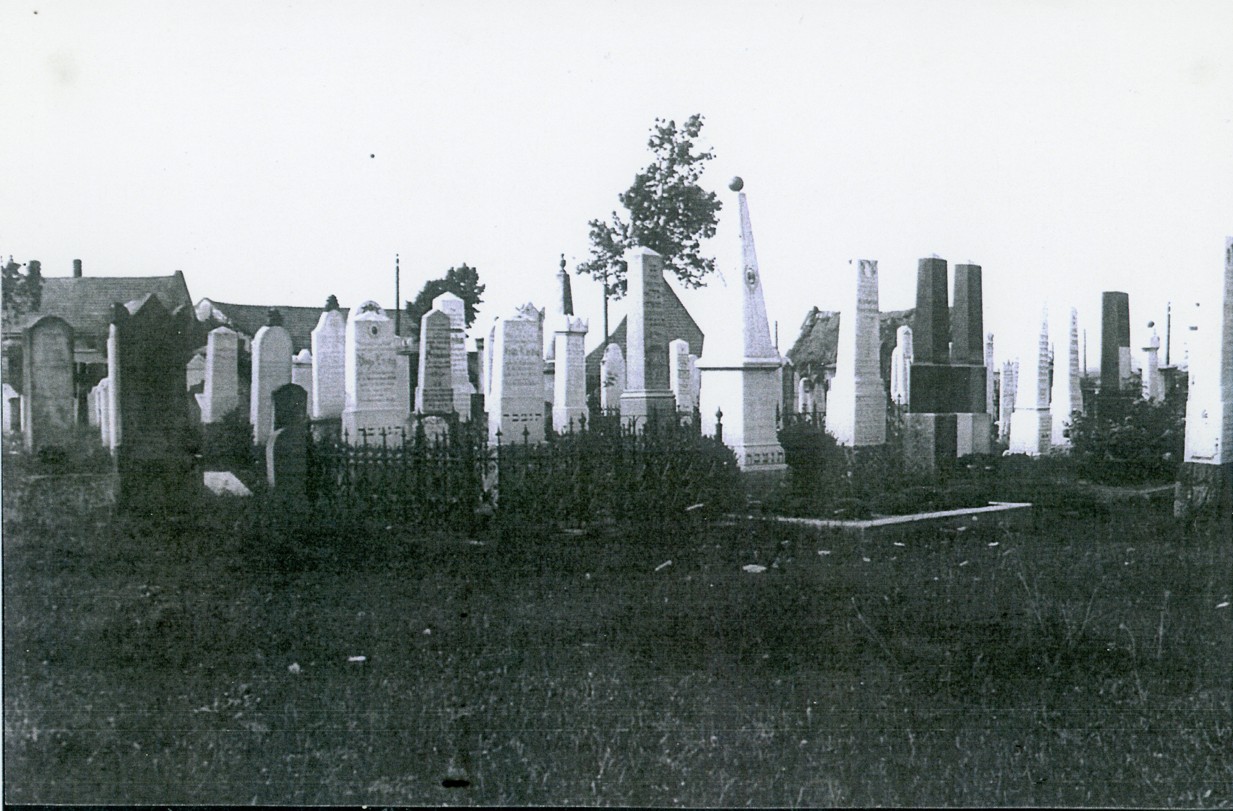
The cemetery then contained about 250 headstones. The oldest, from the early nineteenth century, were sandstone steles known as matsevá – upright slabs with rounded or triangular tops carved with Hebrew inscriptions. Later, post-emancipation gravestones often took the form of obelisks, usually of polished granite or marble, bearing inscriptions in both Hebrew and German script. Period photographs show monuments of this later type predominating.
The cemetery was destroyed by the Nazis in 1942–1943, and most of the gravestones disappeared. Some of the oldest stones were used to pave the bed of the Brůdek Brook in Rovniny. The event soon faded from memory, and the search for the matsevá lasted decades; they were not rediscovered until 2006. Their recovery prompted the cemetery’s restoration: in 2008–2009, sixty-two complete or halved gravestones and 130 fragments with traces of inscriptions or decoration were re-erected. The cemetery was reopened on 14 October 2009 in the presence of Chief Rabbi Karol Efraim Sidon.
Cemetery of the Red Army
1946
Ostravská
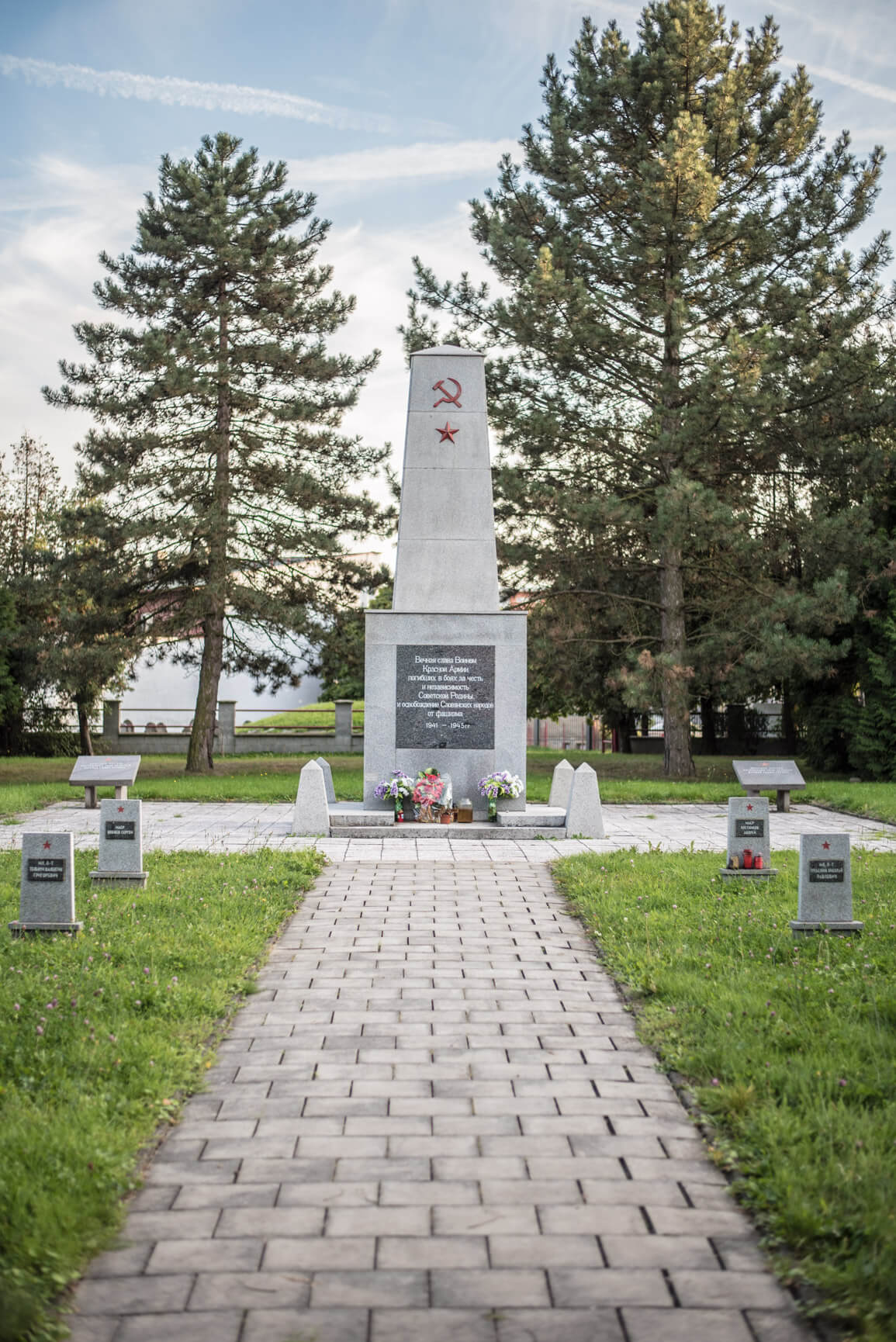
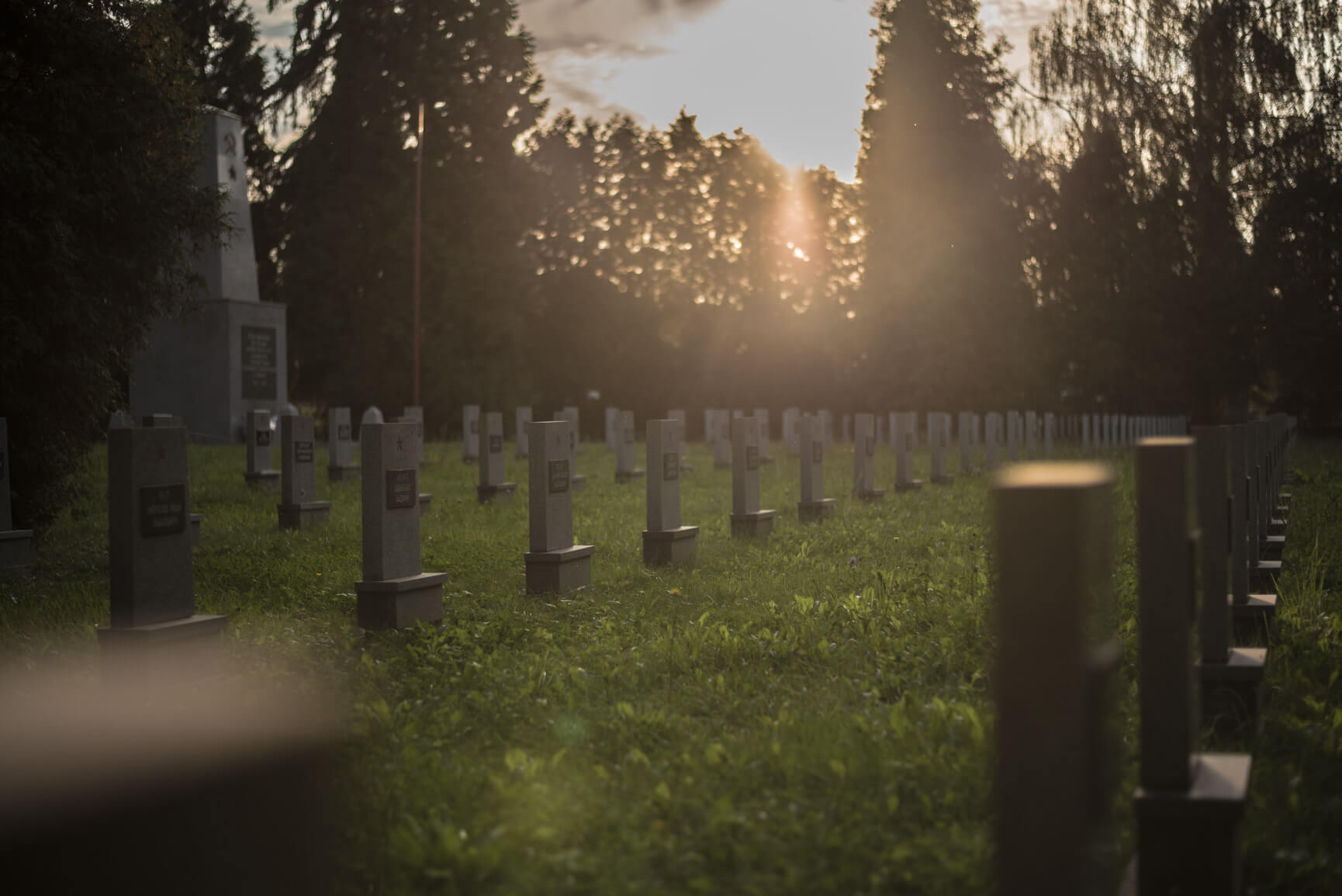
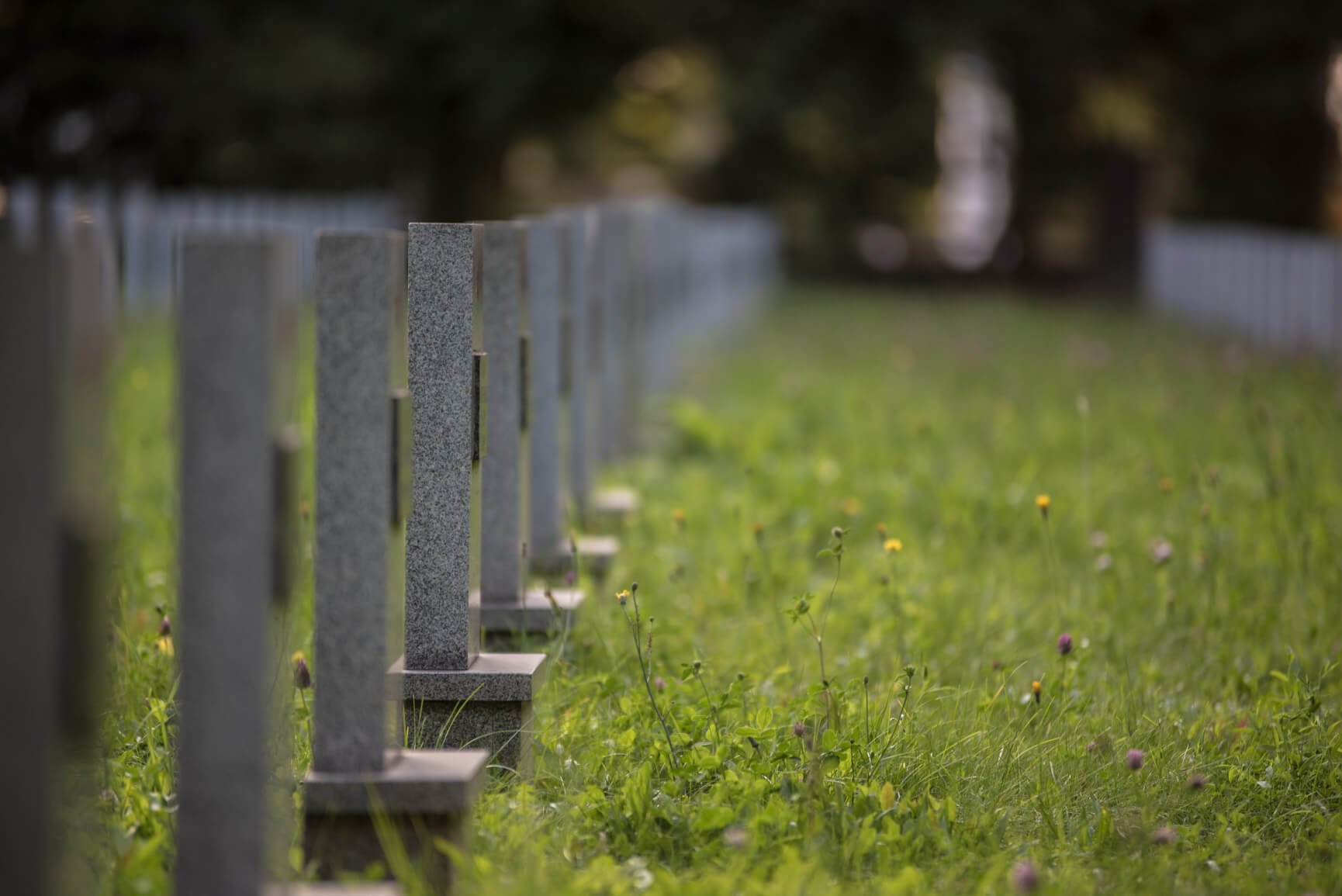
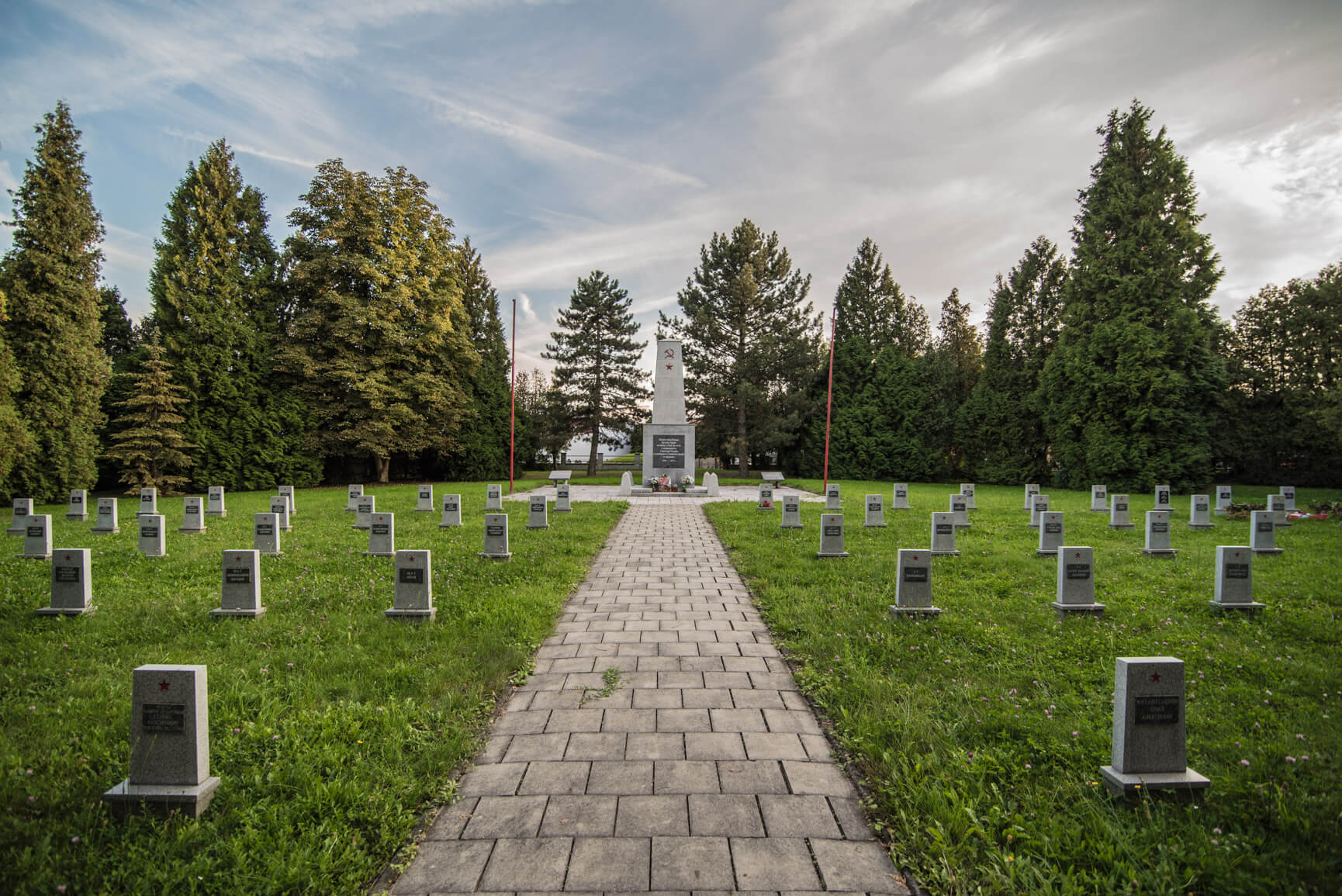
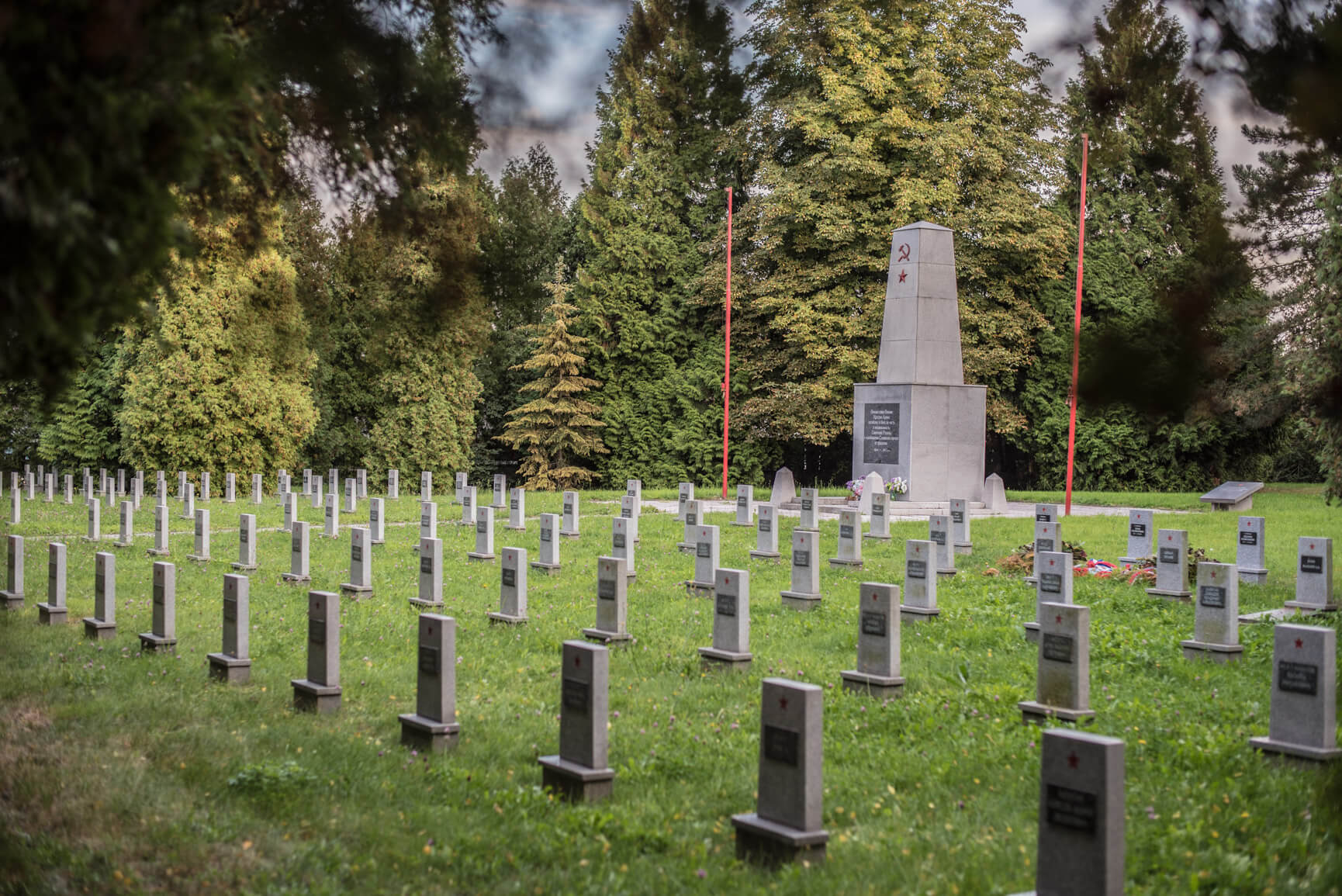
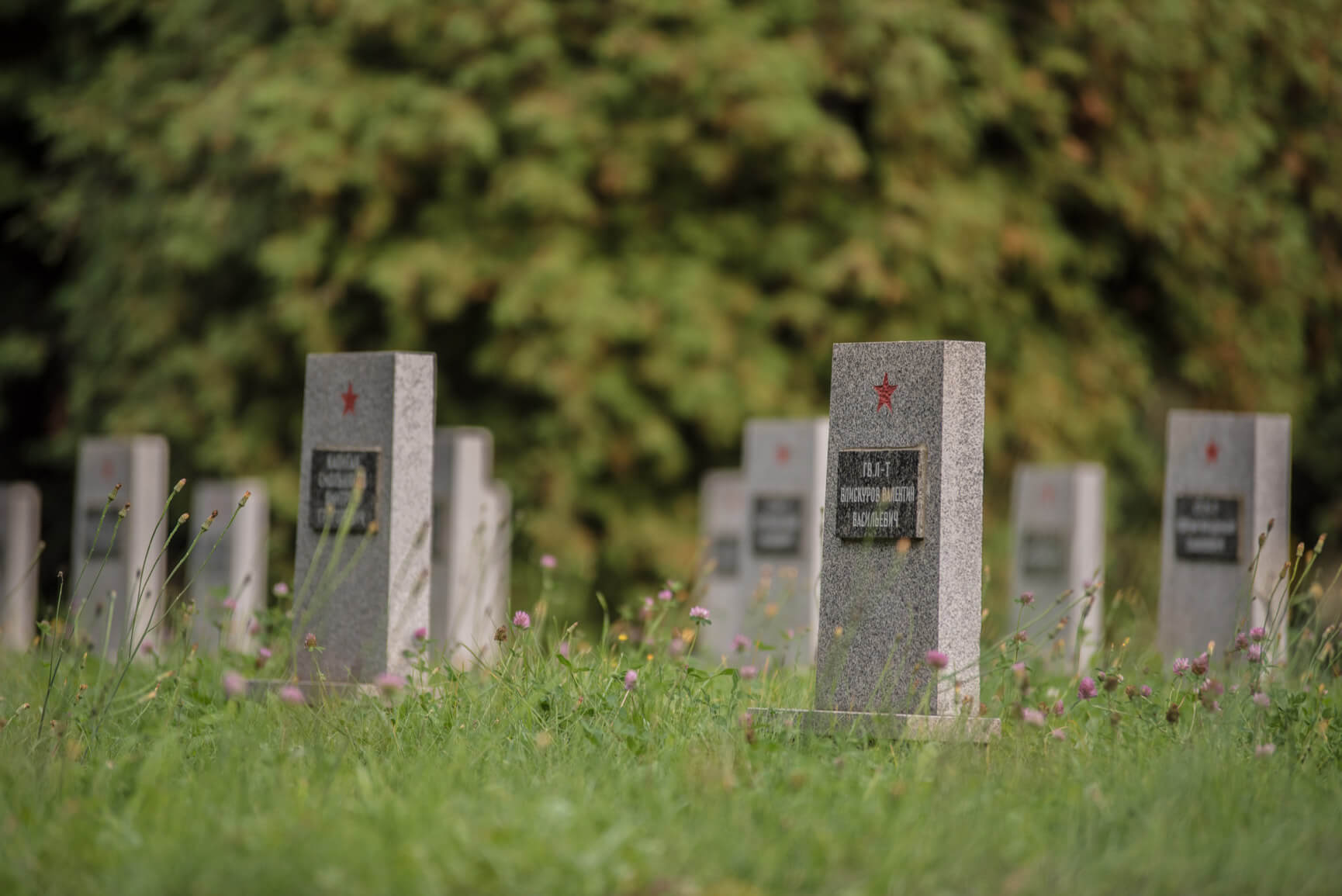
During the fighting at the end of April 1945, forty-nine soldiers of the Red Army fell within the town’s limits and were provisionally buried in various places – by the brickyard, at the cemetery of St Margaret, and elsewhere. It was later decided to create a memorial site in Hlučín, where the remains of other Red Army soldiers killed in the Hlučín region and part of the Bílovec district would also be laid to rest. The chosen site was the front section of the disused and war-damaged Jewish cemetery. Its ceremonial hall and mortuary from 1860 were demolished, and the exhumed remains of those previously buried there were placed together in a mound at the rear. New graves were then dug for 3,360 Red Army soldiers. The memorial’s inauguration, with the unveiling of the monument, took place on 10 March 1946. Few realise that, by number of burials, the cemetery is the second-largest resting place of Soviet soldiers in the Czech Republic (after Brno). The last burials here took place in 2016 and 2017.